

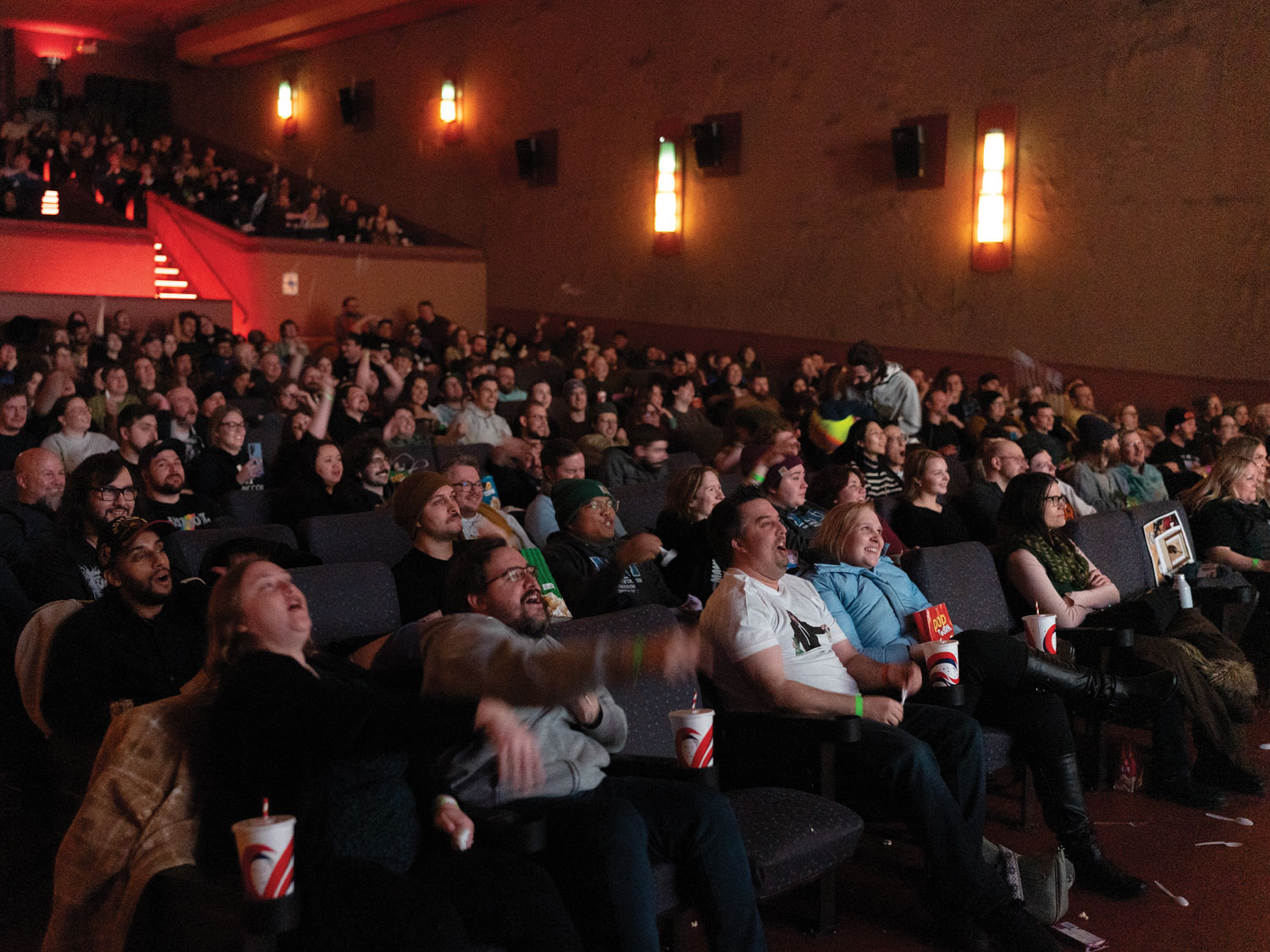
It’s a feels-like-minus-30 evening in January after 10 p.m. A nearly sold-out crowd of 464 people is inside the Garneau Theatre, repeatedly throwing plastic spoons at the movie screen. Their laughter is continuous, their clapping rhythmic. “It feels like a rock concert,” says actor, author and director Greg Sestero, who co-stars in the film and is in attendance. “Edmonton is easily one of the top-three audiences in the world.”
For nearly 15 years, Metro Cinema’s interactive screenings of the 2003 film The Room have become a ritual. In an era when moviegoing seems based on a dubious business plan, this famously strange, so-bad-it’s-good cult film has become integral to one of the city’s entertainment offerings.
This Edmonton tradition started in Los Angeles in 2003 with two then-recent high school grads, Scott Gairdner and Michael Rousselet. Both are now directors, and if The Room is a cult film, they are its cult founders. Back then, ads for a bizarre-looking film prompted the duo to seek it out, at a mostly empty L.A. theatre. “I assumed it would be boring and ponderous,” Gairdner says. “But when it started — I remember it clear as day, like the birth of my children — we were giggling like morons at the title cards. After the strange delivery of the first line, ‘Hi babe,’ we lost it. We knew we hit the jackpot.”
The two encouraged friends to join subsequent screenings. At the end of the film’s two-week run, about 100 people gathered for what had become one of Gairdner and Rousselet’s interactive screenings. The sudden increase in attendance caught the attention of The Room’s mysterious director/writer/lead actor Tommy Wiseau, who started adding screenings. Soon the film had lineups and celebrity attendees.

Rousselet figures The Room went from L.A. in-joke to worldwide interest in 2008 when Entertainment Weekly published a story about the interactive screenings, boosted by burgeoning Facebook and Twitter users.
Dave Clarke and Jeff Page, co-hosts of Metro Cinema’s Turkey Shoot film series — known for providing live commentary over “aesthetically challenged” films — recall that audience members began requesting The Room, and it first screened in Edmonton in 2010, to a nearly full theatre of Turkey Shoot regulars.
Clarke and Page screened it again just a few weeks later. This time, it sold out and they turned it into an event. Page dressed up as Wiseau and threw a football around the lobby. There was a Tommy Wiseau impersonation contest.
Taylor Chadwick won the contest, and says he was “low-key obsessed” with The Room after a friend had played him a DVD copy. “I was interested in seeing this movie in a crowd,” he recalls. “That was before anyone in Edmonton started throwing spoons and calling things out. I saw it before the traditions made their way up here.”
People have developed their own rituals at screenings. Throwing spoons is the one constant, though few regulars know its genesis. But back in the L.A. in the early aughts, Gairdner and Rousselet’s first few screenings just involved casual chatter and laughter. “Like a liturgical tradition, people have lost sight of where the spoons came from,” Gairdner says with a laugh. During their second watch that day, Rousselet recalls: “I noticed a photo of a spoon in a picture frame and thought, ‘What the hell is this?’”
“People kept missing it, so every time one showed up, I would yell ‘SPOON!’” Rousselet recalls. It turns out there are a lot of spoons in the movie.
For their fourth screening on the last night of the two-week run, Gairdner and Rousselet wanted to pack the theatre. “Some of our friends were skeptical,” Rousselet recalls. “We said we’d make it worth their while and thought, ‘How do we Rocky Horror this?’ We brought footballs, put ties on our heads and brought plastic spoons. We just started interacting with it and making it our own thing.”



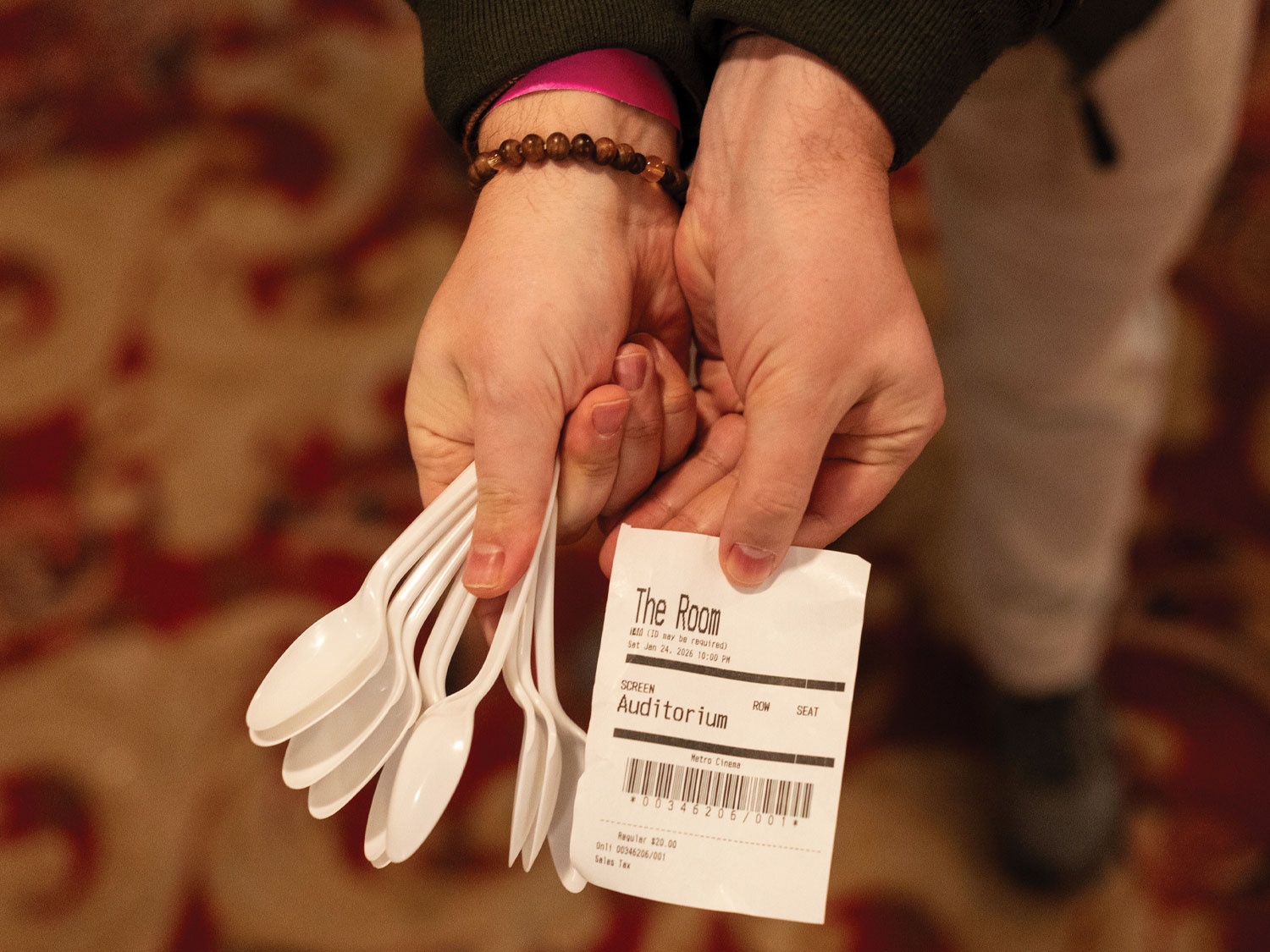
In parts of the film when actor Wiseau looked down or waved toward the corner of the screen, people would jump up and dash to his point of gaze to wave back, Gairdner says. “And when Johnny delivers his ‘If a lot of people loved each other…’ speech, the crowd would burst into a standing ovation.”
Gairdner says his wife Erin first started attending the screenings, she discouraged the spoons, saying it was a mess for theatre employees to clean. “Now we’ve made a mess for the theatre employees worldwide,” Gairdner says. “Sorry, Metro Cinema, and thank you.”
Metro Cinema moved to its current home in the Garneau Theatre in 2011 and started screening The Room monthly. “We were experimenting with late night screenings, and we could count on a bunch of people coming out to 11:30 p.m. screenings,” says Heather Noel, the programming manager at Metro Cinema. “There aren’t many movies that can bring in an audience at that time. Honestly, it financially made sense.”
Metro Cinema welcomes the interactive elements, except footballs. Noel says they also start every screening with an etiquette reminder to laugh at rather than take part in the misogyny in the movie. “We’ve done a great job of improving the culture of these screenings.”
Metro Cinema screens the film with subtitles. Even so, don’t expect it to make sense. Metro’s executive director Dan Smith has watched the audience evolve. “I’ve marvelled at how it has broadened into a popular phenomenon,” he says. “Nowadays it attracts a diverse audience with a variety of tastes, not just fans of B movies and cult films. But do not watch it at home! You need to see it in a theatre to experience the energy, absurdity and chaos of The Room.”
Matt Bowes’ first time watching The Room was at the January screening, and he says it was fun. But what did he think of the movie? “If you’d told me the director had never seen a movie before in his life, I would believe you,” Bowes says. “I could also believe this was the first movie ever made.”



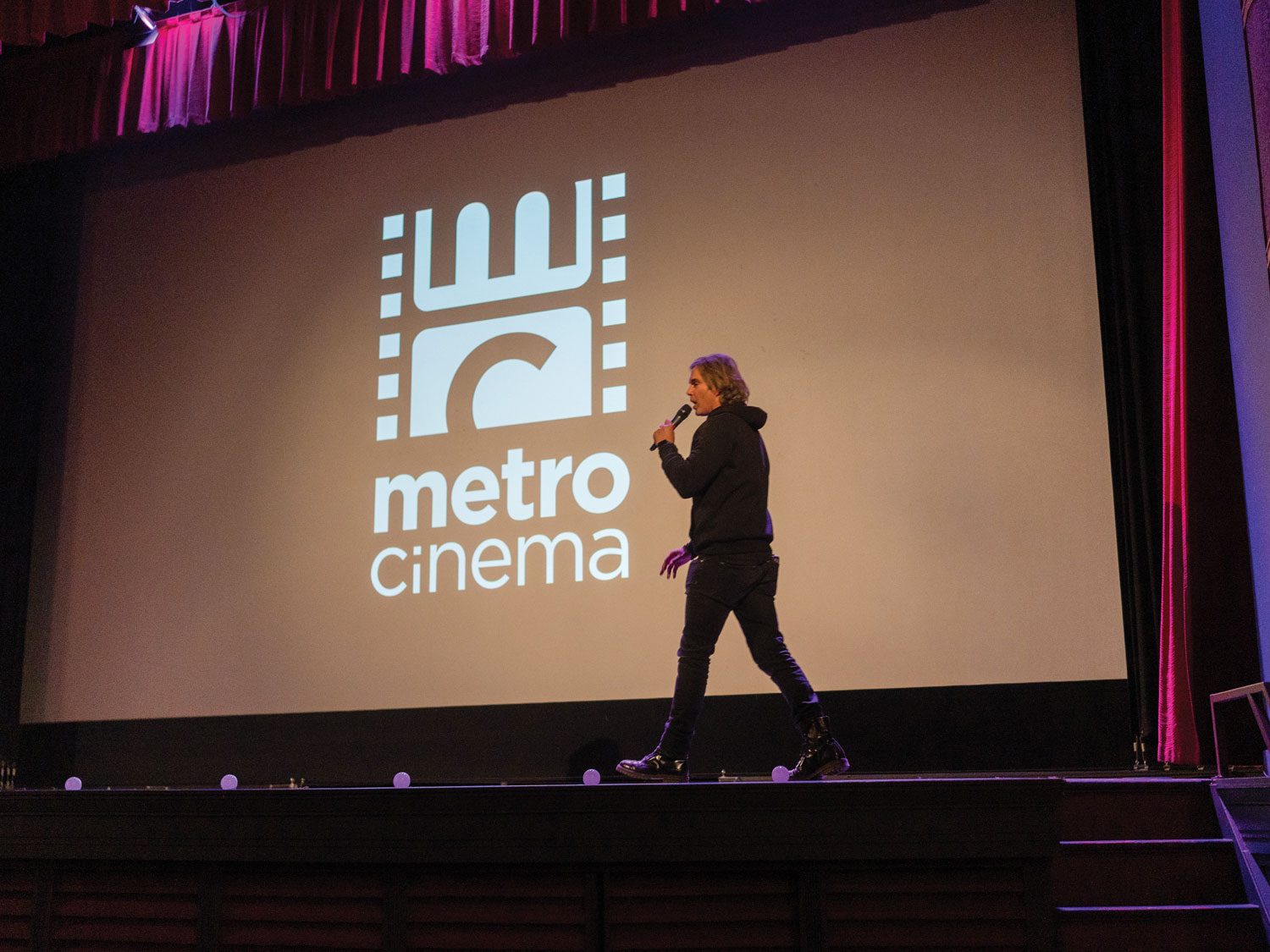
When The Room made its post-pandemic return to Metro Cinema in 2022, 500 fans showed up. It still screens regularly throughout the year, often earlier than 11:30. “We used to think of it as the university crowd, but that’s changed a bit,” Noel says. “There are new people discovering it, and a fan base for whom this is a comfort watch.”
If The Room prompts Edmontonians to act like they’re at a rock concert, then Greg Sestero is the rock star. Sestero attended his first Metro Cinema screening in 2015 as part of a tour for his book The Disaster Artist. He’s since hosted screenings of The Room — alongside other projects — at Metro Cinema eight times. Fans show up in droves. “They’re familiar with the film and gracious,” Sestero says.
For die-hard fan Sam Fraughton, who estimates she’s seen it 20 times, Sestero elevates the experience. “Every quip he has is so funny, all these random things that he remembers from filming,” Fraughton says.
“Edmontonians have a sense of humour,” Sestero says. “It’s a fun movie, especially in the winter, to just get together, have a beer, have a laugh. Anytime I’m in the vicinity with a new project, I come to Metro Cinema.”
Much like the way Gairdner and Rousselet grew the audience, The Room endures at Metro Cinema because it’s made to share. The thrill comes from bringing a newcomer, and watching disbelief become delight. Each screening is a shared discovery. “It’s a good crowd movie, that you can rewatch and have a different experience,” Sestero says. And The Room keeps playing.
“The Room is the movie we screen the most,” Noel says. “As long as people keep showing up, we’ll screen it. The enthusiasm continues to escalate.”
And what if you told Gairdner and Rousselet in 2003 that their L.A. screenings would engender a tradition decades later in far-off Edmonton? “That would have blown our minds,” Gairdner says.
It surprises Sestero, too. “I didn’t expect anybody to see this movie,” he says. “There are so many things to do with your time. It’s incredible that it still brings people out and brings them joy.”
This article appears in the April 2026 issue of Edify