
2J Pantoja has a theory: just like cats love to chase laser lights, humans love to chase spheres. “We love playing games where we chase spherical objects,” says Pantoja, the owner and head coach of Flyfree Movement Gym. “You have basketball, baseball, volleyball. Flatten a sphere and you get a disc — or a hockey puck.”
He doesn’t think there’s anything wrong with playing a ball-based sport, of course, [he plays basketball] but Pantoja believes the purest form of athletic ability doesn’t involve any equipment or restrictions, just the human body moving through the environment. That’s parkour, and it’s the focus of the gym he founded in 2013. Before he opened the gym, Flyfree was a Facebook group for meetups [or jams, as the community calls them].
“To the uninitiated, it is an extreme sport because that’s what the media loves to show,” he says. When people see parkour as leaping over gaps between buildings or making jumps up walls twice the height of the climber, they write it off as impossible, at least for them. Change your perspective, however, and it’s all a matter of training. And you can still practise parkour without doing the death-defying stunts you might have seen on social media. “Parkour is knowing how to move through a physical environment. You’re in a physical environment all the time,” Pantoja says.
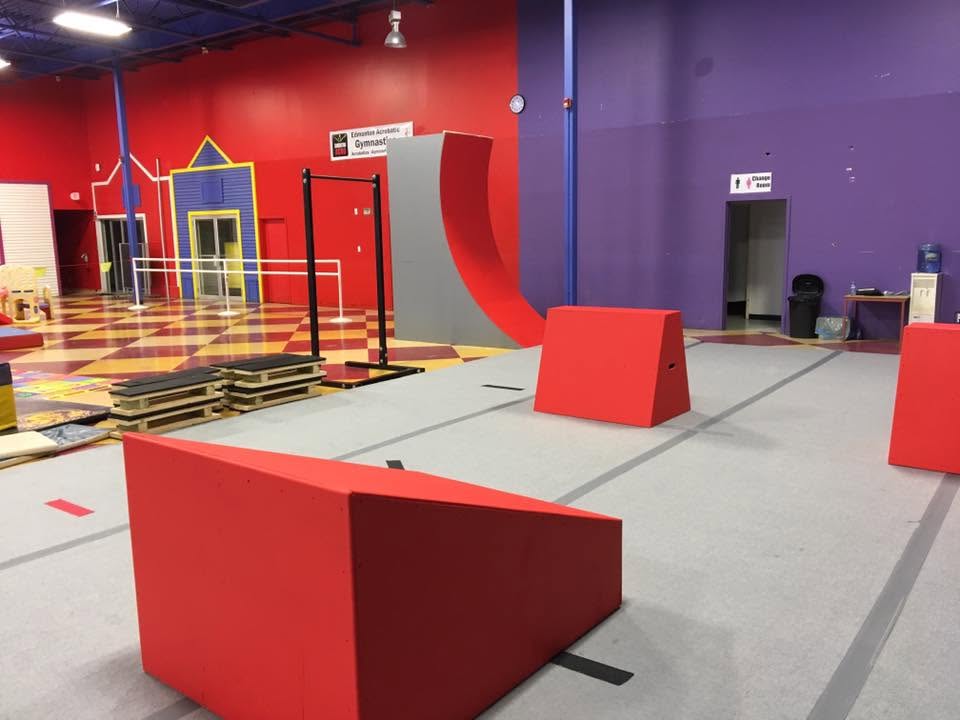
He emphasizes that parkour builds on the movements that everyone learns growing up, like walking and running. It also focuses on jumping, climbing and falling safely. Kids do these movements often but adults typically don’t, opting for gym sessions of lifting weights, running, cycling or playing sports. The appeal of parkour, and by extension calisthenics in general, is the ability to exercise without any equipment or competitive games with others. Plus, when you really break it down, a parkour-focused gym like Flyfree is a giant playground for adults.
“The importance of fun has to be there,” Pantoja says. “Everyone tells me they feel like a kid again. It’s fun, but you’re also increasing your strength and dexterity.” He says that Flyfree has some regulars in their 40s and 50s that move more fluidly than newcomers in their teens and 20s because of this regular, natural movement.

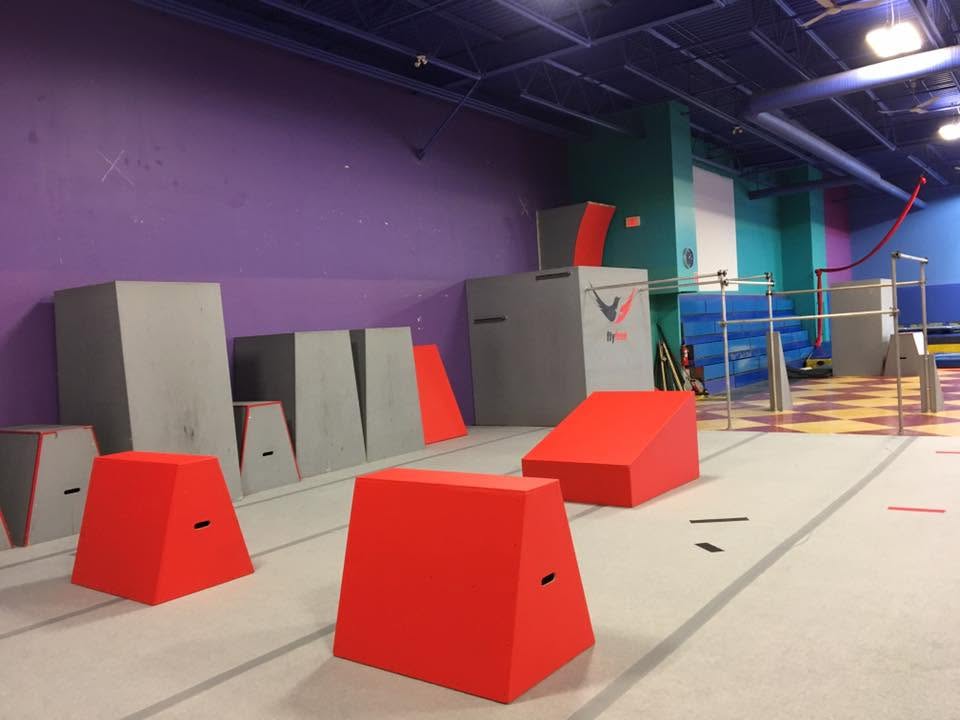
While you don’t need any special equipment for parkour, the strength and coordination developed through its movements easily translate to other sports, crafting a person into the ultimate jack of all trades. Pantoja says whenever he plays basketball, he gets comments about how he must play all the time. “I don’t. Well, I know the game,” he says, laughing, “but I can jump high and I can move quickly because I’ve trained my body.”
Flyfree Movement Gym has a few different options for people who want to try it out. The open gym is available for drop-ins and there are multiple membership tiers depending on how often you want to attend classes. There’s also a competitive level that is by invite only, and Flyfree has an award winning parkour and calisthenics competition team that has taken home medals from around the world.
Once you’ve started to learn the movements, the whole idea is you can practise them anywhere. “There’s no other sport that tackles what parkour does,” Pantoja says. “It’s not even a sport. It can be, but it doesn’t have to be. It’s a lifestyle, a way of thinking.”
Flyfree Movement Gym
Coronet Addition Industrial | 8303 Argyll Road NW, Edmonton | flyfreemovement.com