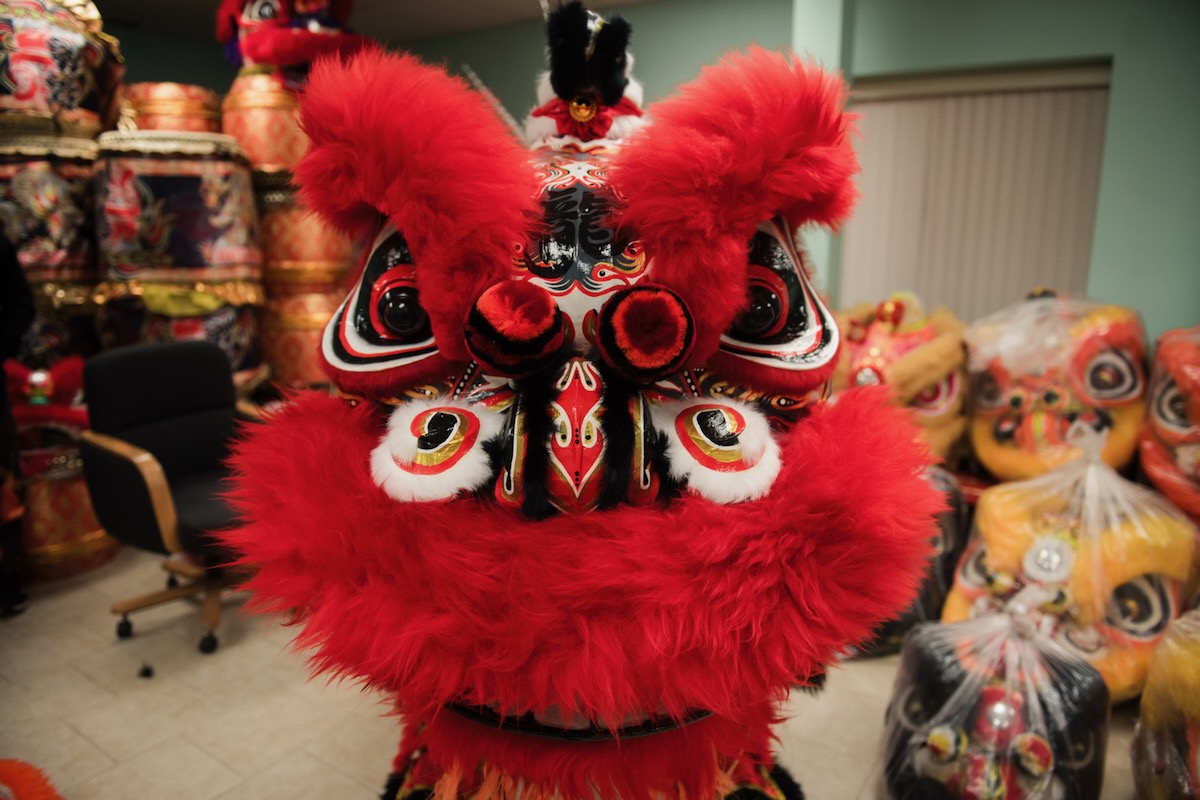
The lion blinks.
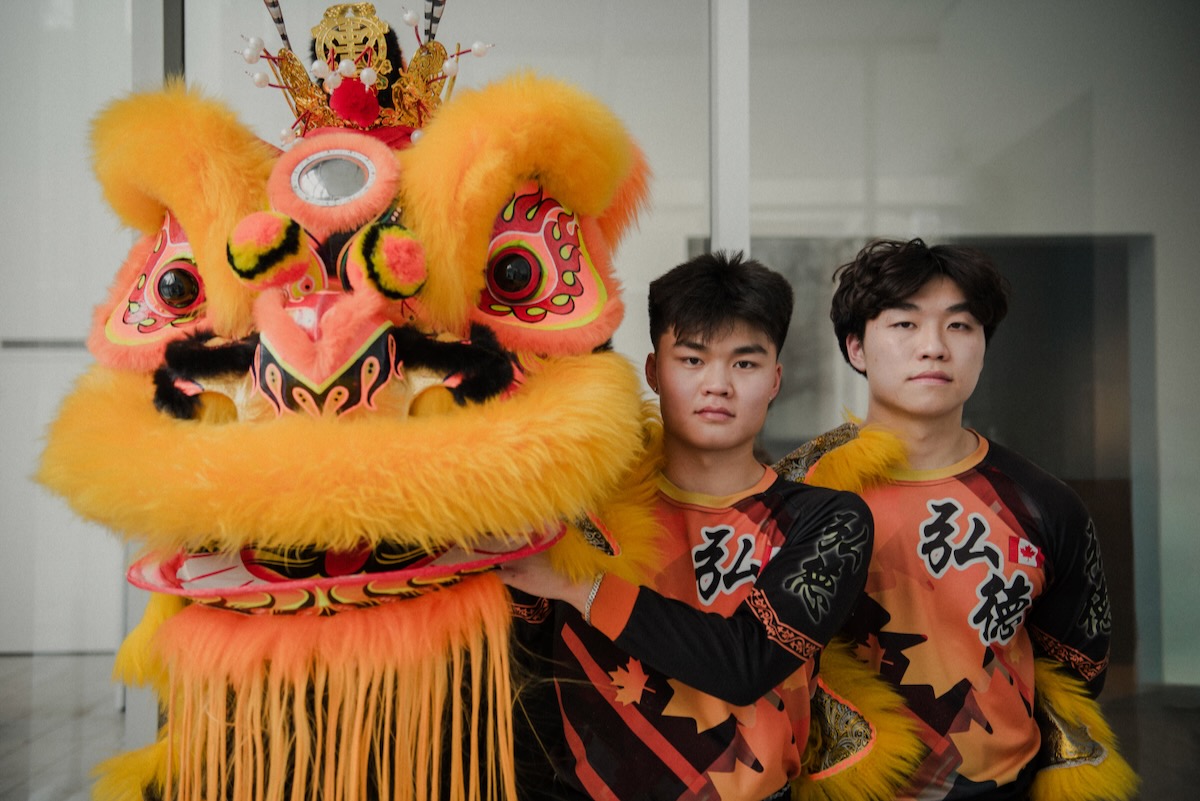
Somewhere underneath the colourful costume, with its red fur trim and painted head, two young brothers synchronize to move the lion costume, from its articulated head to its tail. For years, they have trained in stunts, jumps and acrobatics.
Brothers and lion dancers Mason Yong, 21, and Martin, 23, have been preparing to represent Canada against lion dance teams from the United States, Mexico, Panama and Trinidad and Tobago as Edmonton hosts the Pan American Lion Dance Championship for the first time on Aug. 22 and 23 in Chinatown. The competition takes place during the Edmonton Dragon Festival.
I first met Mason and Martin at their training facility back in January.
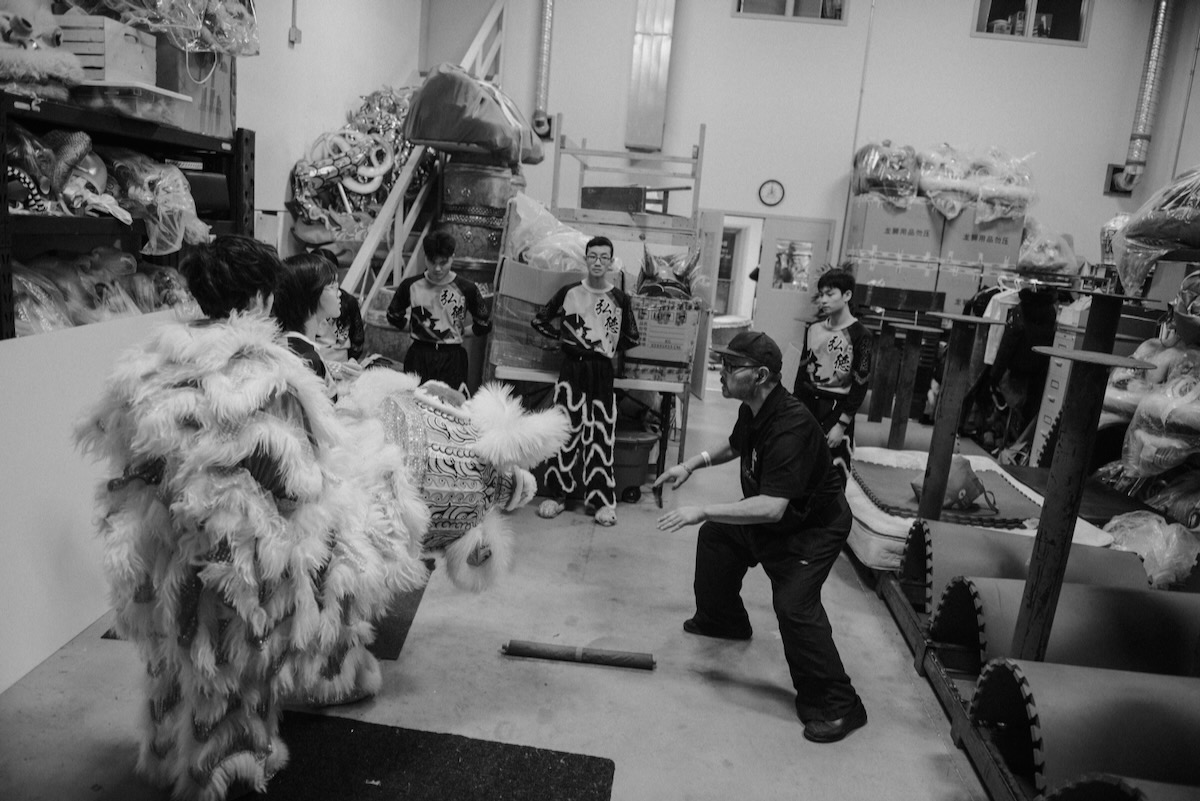
It’s -34 C and I’m in my car outside a warehouse tucked between rows of industrial buildings on the city’s north side. This is where the Hong De Cultural & Athletic Association practices. In the parking lot, parents hurry their children indoors before they are swallowed by the unforgiving winter.
Despite the cold, practice continues.
Inside the studio, students ranging from age seven to 21 gather. They stand with their hands folded behind their backs, listening to their sifu (teacher or master), Michael Yong, Mason and Martin’s father.
“You have to stop thinking like a human and start thinking like an animal,” he tells his students. A pause hangs in the air. Their faces are flushed and every correction from the teacher is met with careful attention. Yong demonstrates the smallest adjustments.
Tall poles of varying heights stretch across the floor, set up on one side of the warehouse studio. Martin hops between them, sweating and breathing harder with every jump.
This gravity-defying sport is an ancient tradition taken to new heights, where the lion is meant to appear curious and playful, yet cautious. “When you see the lion dance, you see a lion,” Michael says. “You’re able to transform a mask into something alive.”
Seven months later, they are ready to compete.

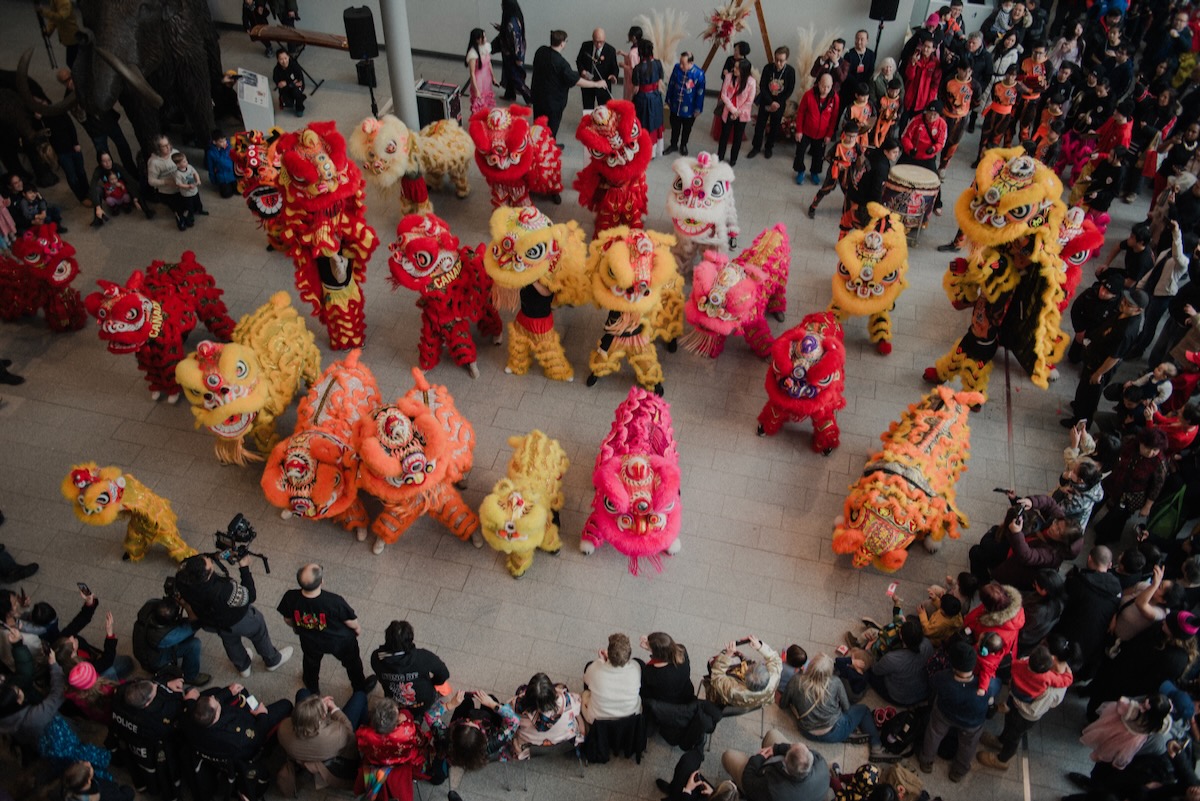
What audiences can expect to see during the championship goes beyond the lion dances many Edmontonians know from Lunar New Year. Lions leap across elaborate obstacles, perform technical stunts and tell stories through movement, rhythm and expression. Every blink, cautious step and dramatic jump helps bring the character of the lion to life. A single misstep could result in injury.
Mason describes the mental shift he makes before every performance. “When I get into that lion, my whole mindset changes,” he says. “I’m thinking like a lion.”
That transformation doesn’t happen overnight.
The work happens year round, even on those cold January days. Training is performance without applause — the ability to keep going when nobody is watching.
The lion dance carries intention. Every pause tells part of a story. Two performers move beneath a single costume, but neither can succeed without the other. The drum becomes the lion’s heartbeat. And the competition brings together some of the best teams.
“It gives everyone a bigger platform to come together and share this passion,” says Yong.
Pan American Lion Dance Championship
Boyle Street | Kanistinaw Park, 10249 96 St, Edmonton | August 21 to 23, 2026 | canadadragonlion.com/events