
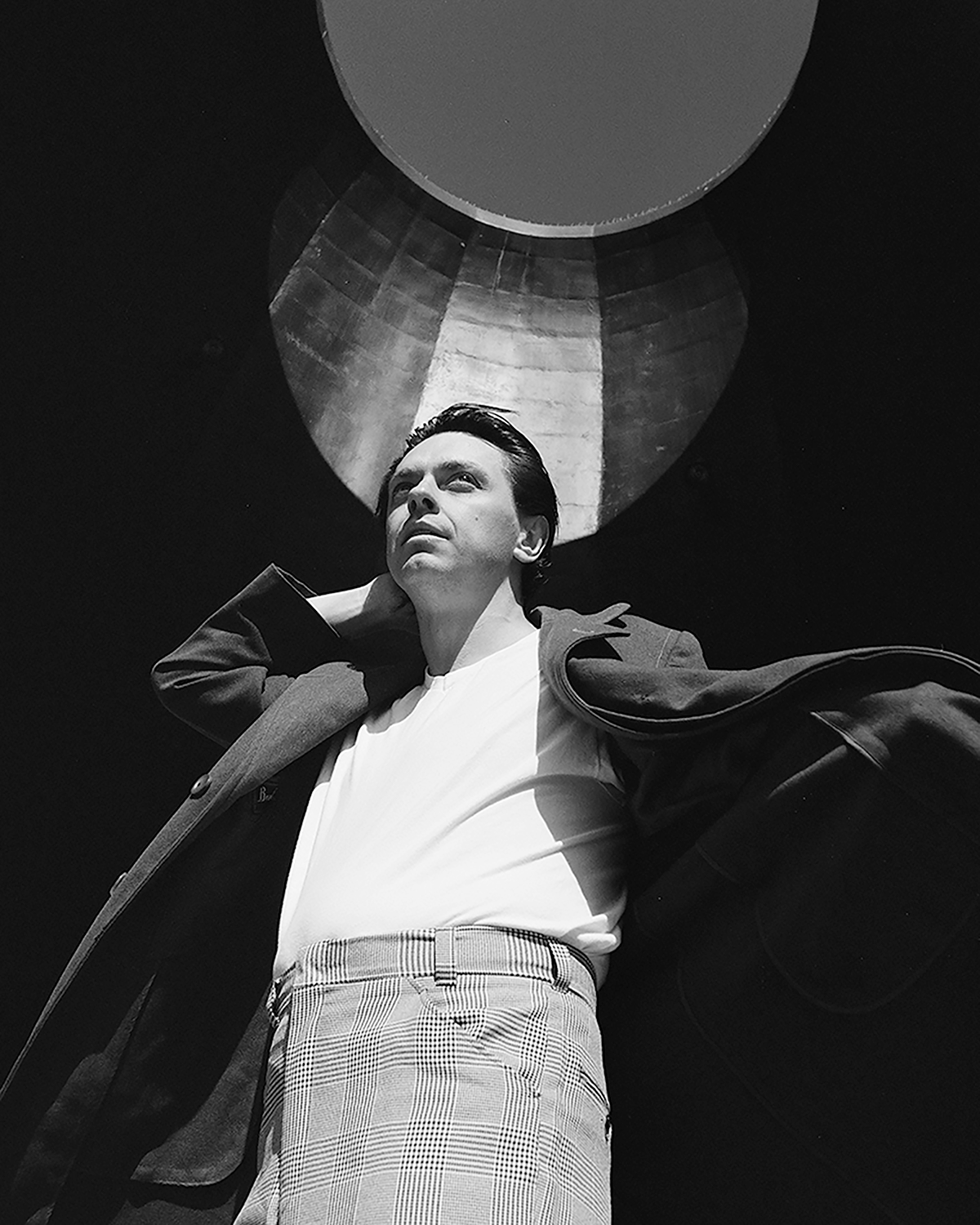
Peter Dreimanis couldn’t have known it back then, but the spark for his role in the movie Sinners came a decade before he started rehearsals for the 2025 film.
In 2014, the Edmonton-born musician had been fronting the Canadian alternative band July Talk for two years when he decided to record a solo cover of “Bad Moon Rising.” It’s an iconic song by Creedence Clearwater Revival, and Dreimanis’s raspy-voiced take was a definite earworm. That side project racked up plays, and in the years following, his cover made it onto the Teen Wolf soundtrack and into trailers for Green Room and The Walking Dead. In 2024, it drifted into the ear of Ryan Coogler — the director of Black Panther, the first ever superhero film nominated for the Best Picture Academy Award.
“I was back in Alberta playing some shows, and I heard from my manager that Ryan Coogler wanted me to audition for his new film,” says Dreimanis. “I was taken aback.” At the time, he had no idea the audition was for Sinners — which has become the most Oscar-nominated film in history, earning 16 nominations. The film weaves together stories of Black musicians and white supremacists, all set in a vampire-ridden 1930s southern United States. “It started a whirlwind experience,” he says of the offer, which came in April of 2024. With a visa in hand to work on location in Louisiana, he flew to New Orleans to begin rehearsals and principal photography.
Though Dreimanis had attended film school in Toronto, he had acted only in independent films and friends’ projects. Sinners involved months of taped audition scenes, musical tests and a deep dive into the character of Bert, a Ku Klux Klan member who meets a vampiric fate.
Director Ryan Coogler has become a name in Hollywood. From directing Fruitvale Station to Judas and the Black Messiah, the auteur has solidified himself as one of the most prominent, imaginative filmmakers of this generation. And Sinners is arguably his most genre-crossing and musically immersive works. Blending supernatural elements with historical themes of race, class and power, the film treats music not simply as a score but as a living element — almost a character itself — woven into the story. The decision to record some of the music live on set, rather than in studio, brought emotional grit and urgency to the performances. It was transformative for Dreimanis.

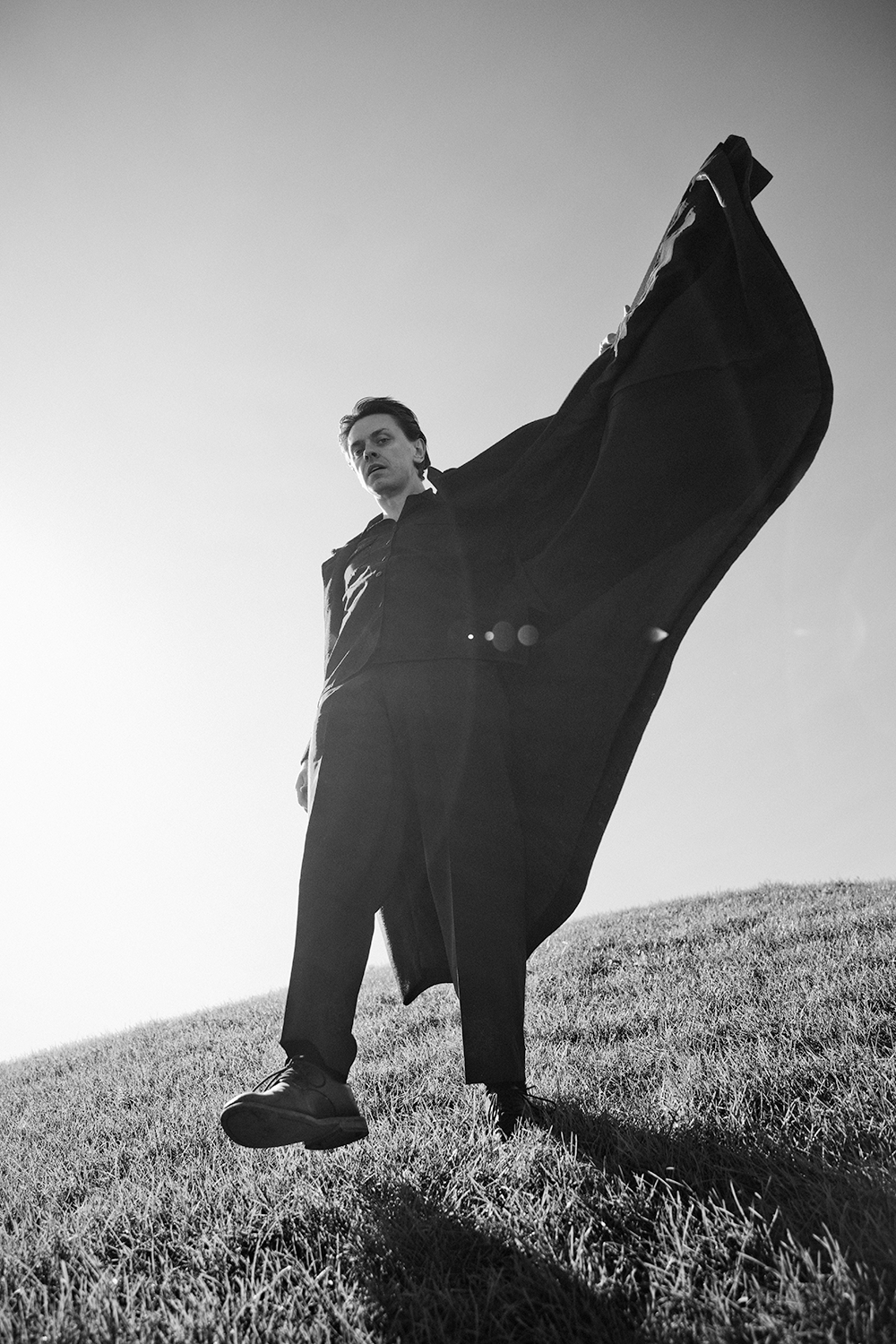
“It was nerve-wracking. Then all that stress fell away when I realized I was safe in a situation with somebody that wasn’t throwing ego around,” he says, referring to working alongside Oscar-winning composer Ludwig Göransson, who scored Black Panther and other blockbusters such as Tenet and Oppenheimer. Dreimanis says he found the musical process deeply collaborative.
He saw that director Ryan Coogler’s longtime collaborators — including Michael B. Jordan, who has appeared in all five feature films Coogler has directed — approached their work with a sense of ease and mutual respect that he found reassuring. “They have a track record that proves that their taste is shared by the world, and appreciated by the world. And their instincts can be trusted.”
“It makes Ryan so good at his job,” Dreimanis continues. “Because he’s a great collaborator and genuinely cares what other people have to say. I think Sinners was created within that ethos.”
To prepare for playing Ku Klux Klan member Bert, Dreimanis referenced Ken Burns’ documentaries on jazz and country music and listened to NPR’s podcast White Lies, which explores the long-lasting impact of racial segregation and disenfranchisement of Black Americans in the United States. Though the story is set in Mississippi, the film was shot in New Orleans, and living there for three months left a lasting mark on the Canadian actor. For Dreimanis, working towards understanding the South’s complicated histories was inseparable from embodying a character shaped by the era’s rigid hierarchies and pervasive racism.
And there’s a moral complexity to the villains in Sinners. “When you look at villains in real life outside of art, you often ignore the challenges and trauma that put them where they are,” he says. Playing Bert meant confronting that tension and acknowledging the complicated personal choices and systemic pressures behind his actions, without ever excusing them.
Immersion in blues music proved revelatory to Dreimanis. Working on Sinners brought him back to the root of his relationship with the genre — the music that attracted him in his early 20s. For a long time, blues had held less currency for him, he says. But working on the film reshaped how he understood the music: not as a historical artifact, but as something present.



“This experience with Sinners caused me to write a lot of music that I don’t think I otherwise would have,” he says.
Alongside his musical projects, Dreimanis plans to continue acting — but only when it aligns with his instincts. He acknowledges the unpredictability of the craft, how much it depends on being the right person for a role. “I don’t feel driven to put myself in a situation where I have to fit a square peg into a round hole, if I’m not the guy for a role,” he says. Since Sinners, he can also be seen in front of the camera in Canadian director Pavan Moondi’s rom-com Middle Life, released September 2025. And when considering where his future creative projects will take him, Dreimanis can’t help but smile at the mention of his hometown.
“I have a very romantic relationship with Edmonton, and with the Prairies,” he says. “I miss the space, I miss the sky… and anytime I write new music, it’s really important to me to come back to Edmonton and play it as soon as possible.”
And it’s easy to believe him. He showed up to our interview wearing an Edmonton Oilers hat, after all.