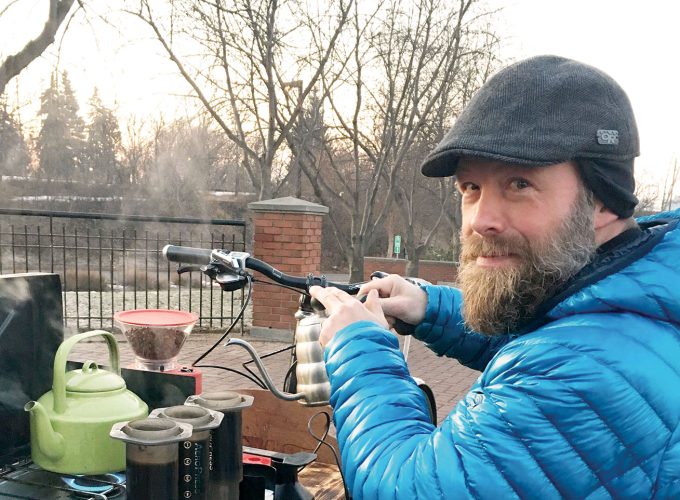

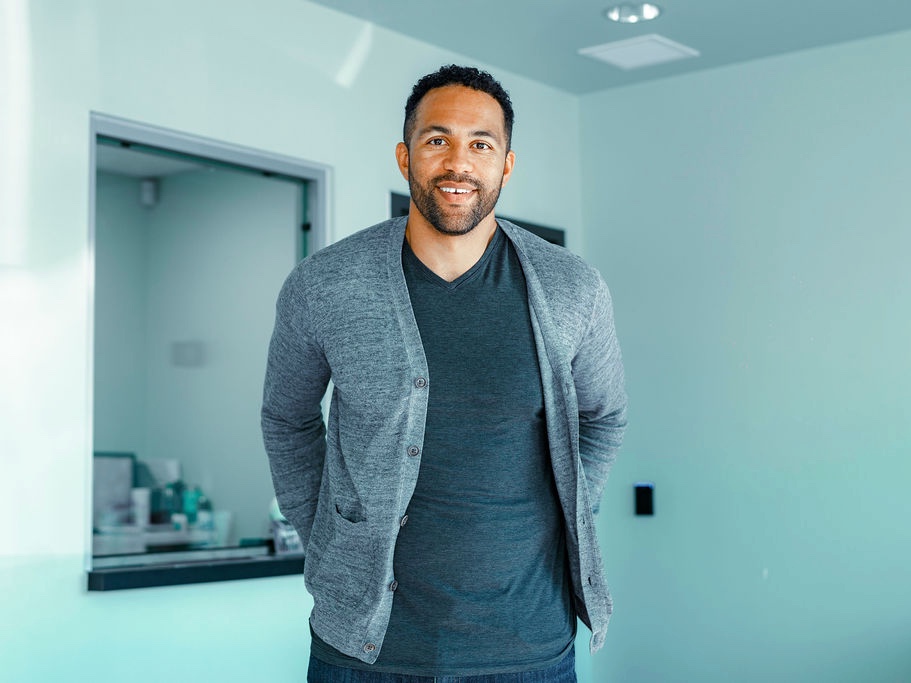
You might wonder how Keenan Pascal does it all.
After graduating with an MBA from the University of British Columbia, he made the leap from the buttoned-up world of banking to the then-burgeoning cannabis industry. He’s the CEO of Token Naturals, a cannabis company that produces, among other things, cannabis-infused drink mixers. He co-owns Token Bitters, which handcrafts bitters for mocktails and cocktails, and he co-owns Spilt Zero Proof Ltd., a mocktail bar.
Most recently, he became CEO of Edmonton-based Hansen Distillery. “Through Token Bitters, we found a really great group of local investors that wanted to fund and finance an expansion of a line for us,” he says. “I’m really excited about Hansen.”
Edify talked with Pascal (who was also a Top 40, class of 2023) to glean four of the lessons he’s learned over his career in the food and drinks industry.
When Pascal first decided to pursue a cannabis company, he quickly realized the licensing process was going to be lengthy. To stay busy, he partnered with Jamie Shtay (director of business and founder of Token Naturals) to start making cocktail bitters for bartender friends. It wound up being an excellent move.
“It was just great timing because the cocktail scene in Edmonton in 2018 was starting to pop,” Pascal says. “We grew to be the biggest bitters company in Alberta. Then we got an opportunity to take the product to Japan and we did that.” At the Tokyo International Bar Show in 2019, Token sold more products than any other vendor’s booth.
“But in the background, we were still working on the cannabis licence,” he says. “We started raising capital for the cannabis side and people trusted us because we already had the bitters business.”
At the beginning of cannabis legalization there was a “green rush.” Entrepreneurs scrambled to fill the new business space. Eight years later, few of those companies remain. But Token Natural is still here.
“We built our facility room by room, not all at once, which a lot of cannabis companies did,” Pascal says. “We had more checks and balances in place so when everything turned because there were just too many people and too much supply, we were positioned to weather the storm. The industry hasn’t quite settled down yet. But you’re seeing it’s less of a roller coaster because the ones that lasted learned from someone else’s mistakes or built it sustainably.”

The cannabis space can be more than just edibles. While Token was the first in the country to produce a cannabis drink mixer, it has continued to evolve. That evolution has included a cannabis version of nicotine pouches users can tuck under the lip, called Viib. Token has also started selling its drink mixers for medicinal purposes, appealing to older consumers.
“We’ve sold more of our drink mixes on medical platforms in two months than we have in two years in the recreational side,” Pascal says.
From the beginning of his career as an entrepreneur, Pascal has relied on mentors.
“Alberta — and Edmonton specifically — is amazing for that,” he says. “A lot of people in the business community are absolute gems and willing to back you and talk to younger entrepreneurs.”
In turn, he’s been able to pass on the help.
“Over the years, I joined the U of A business advisory council and I try to connect with the community wherever I can,” he says. “I sit on the board for the Downtown Business Association. I’m happy to chat with students and new entrepreneurs and talk about what we’ve done. It’s a nice feeling to give back.”
Spilt Zero Proof mocktail bar
Wîhkwêntôwin | 11909 Jasper Avenue, Edmonton | spilt.ca
Hansen Distillery
Armstrong Industrial | 17412 111 Ave NW, Edmonton | hansendistillery.com