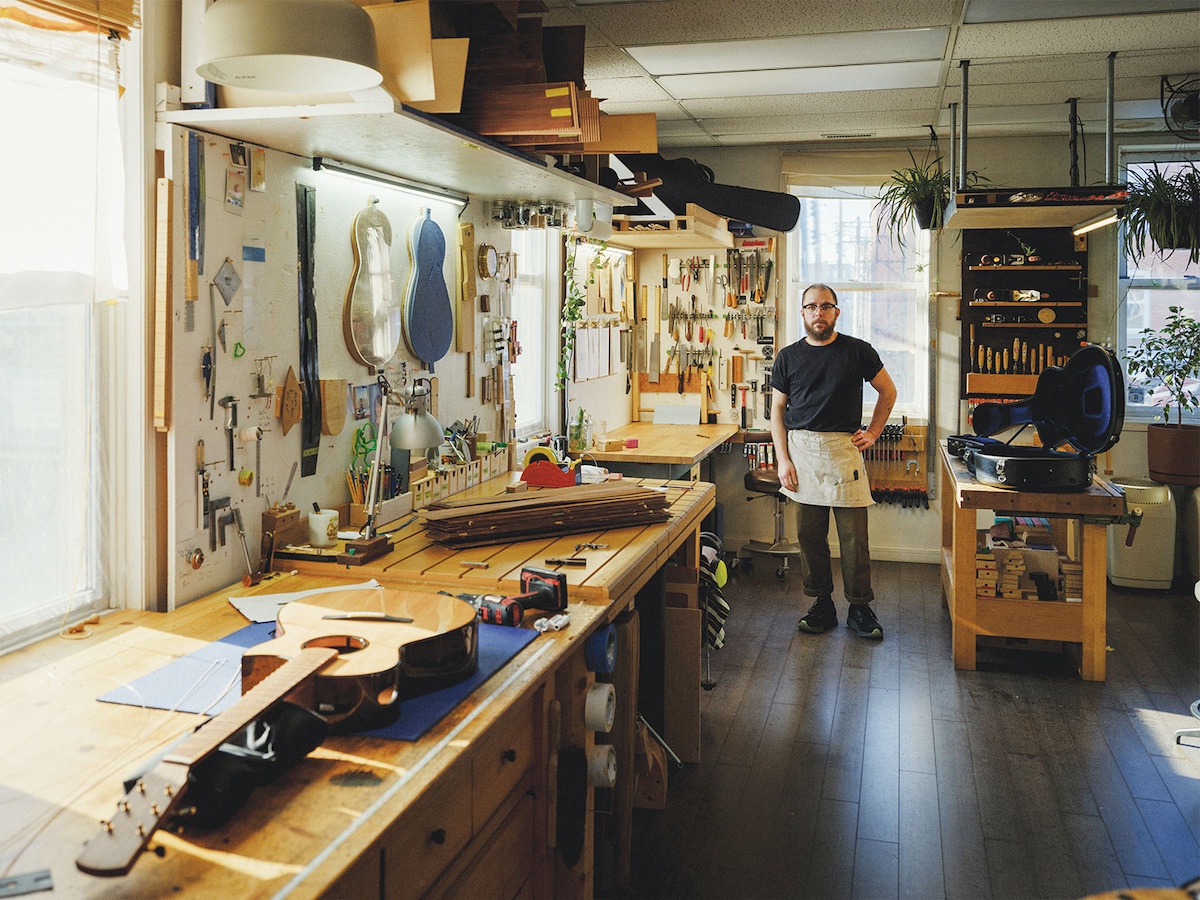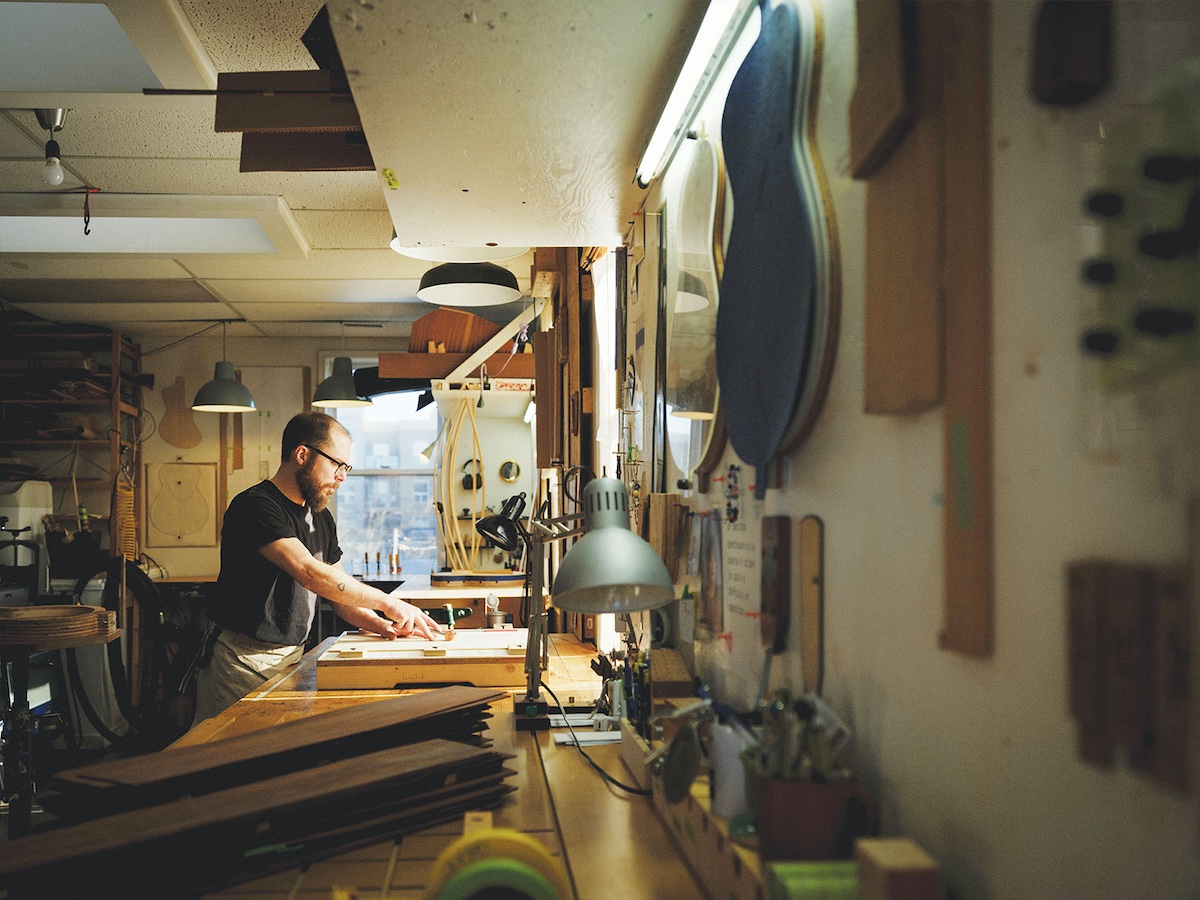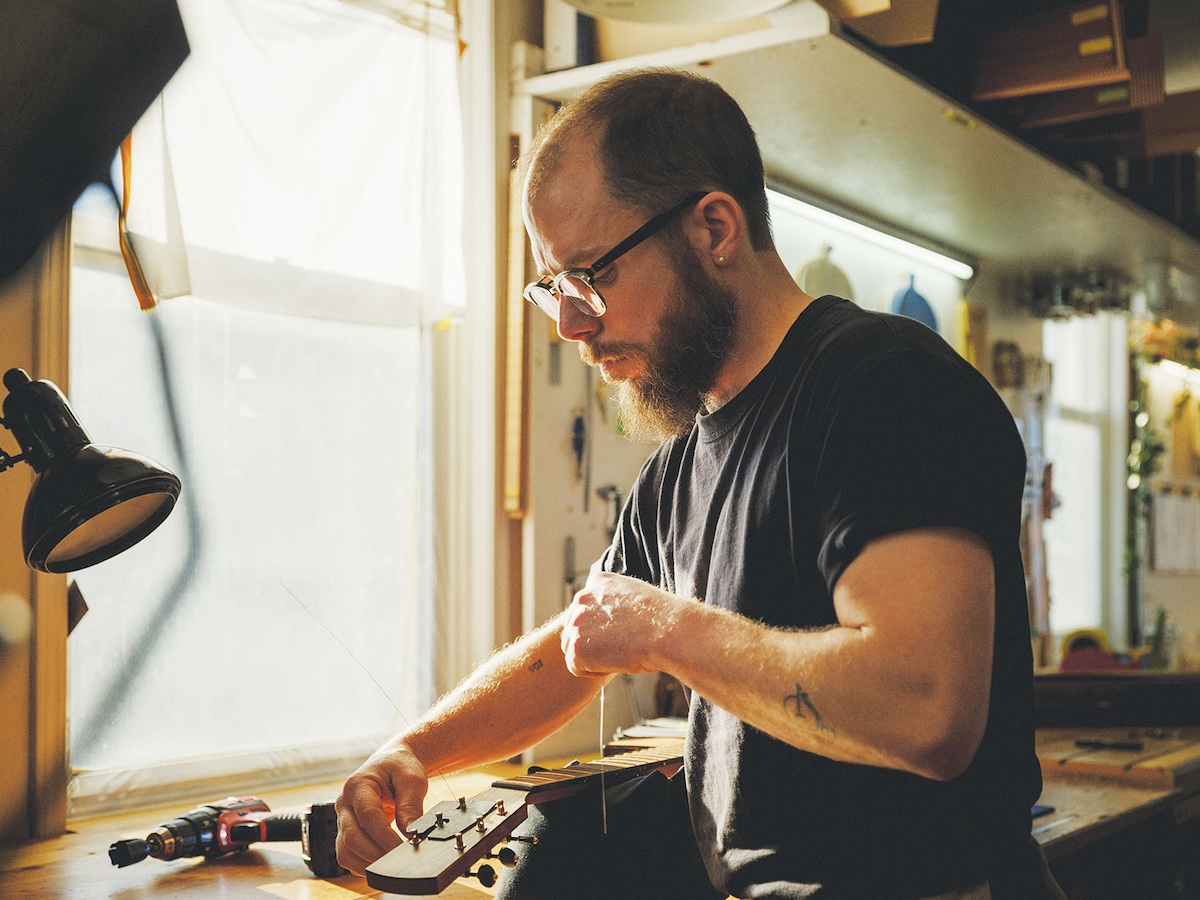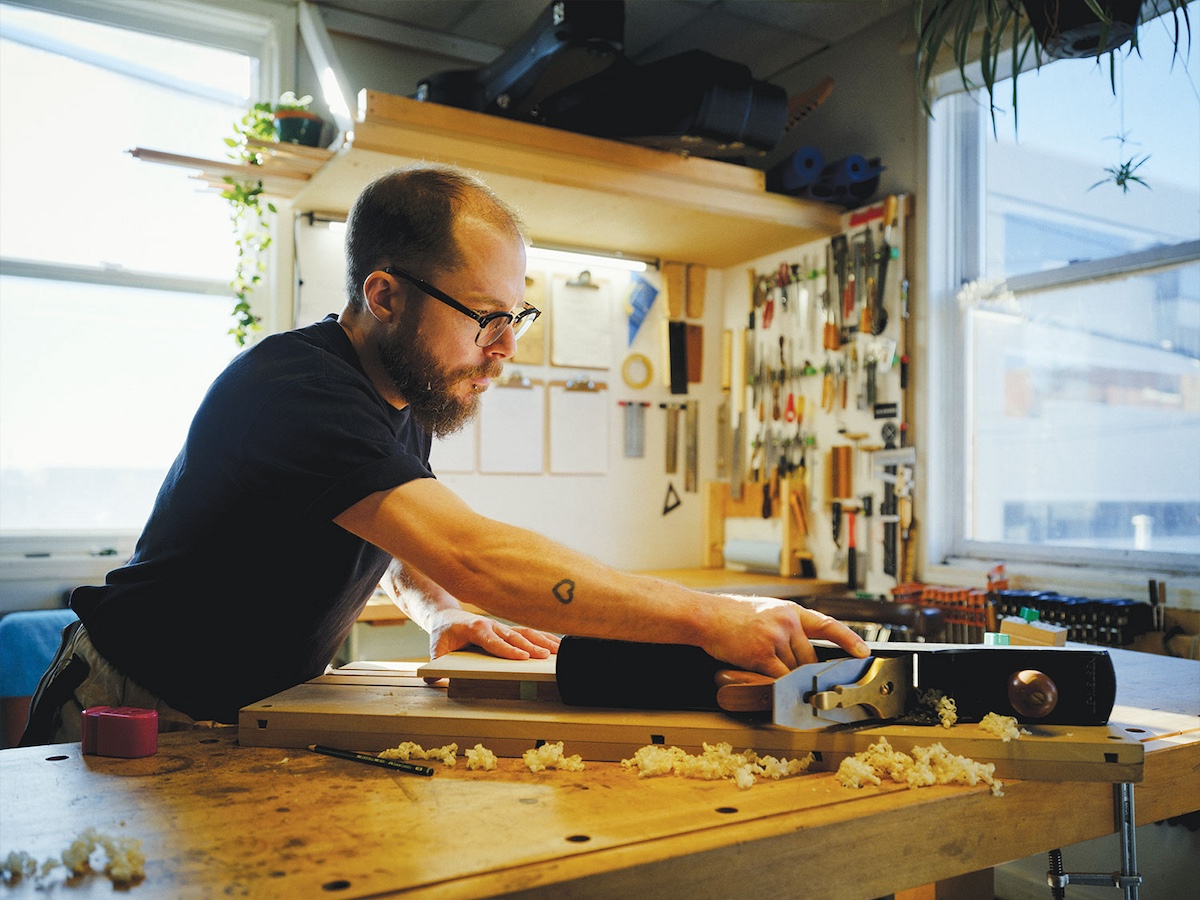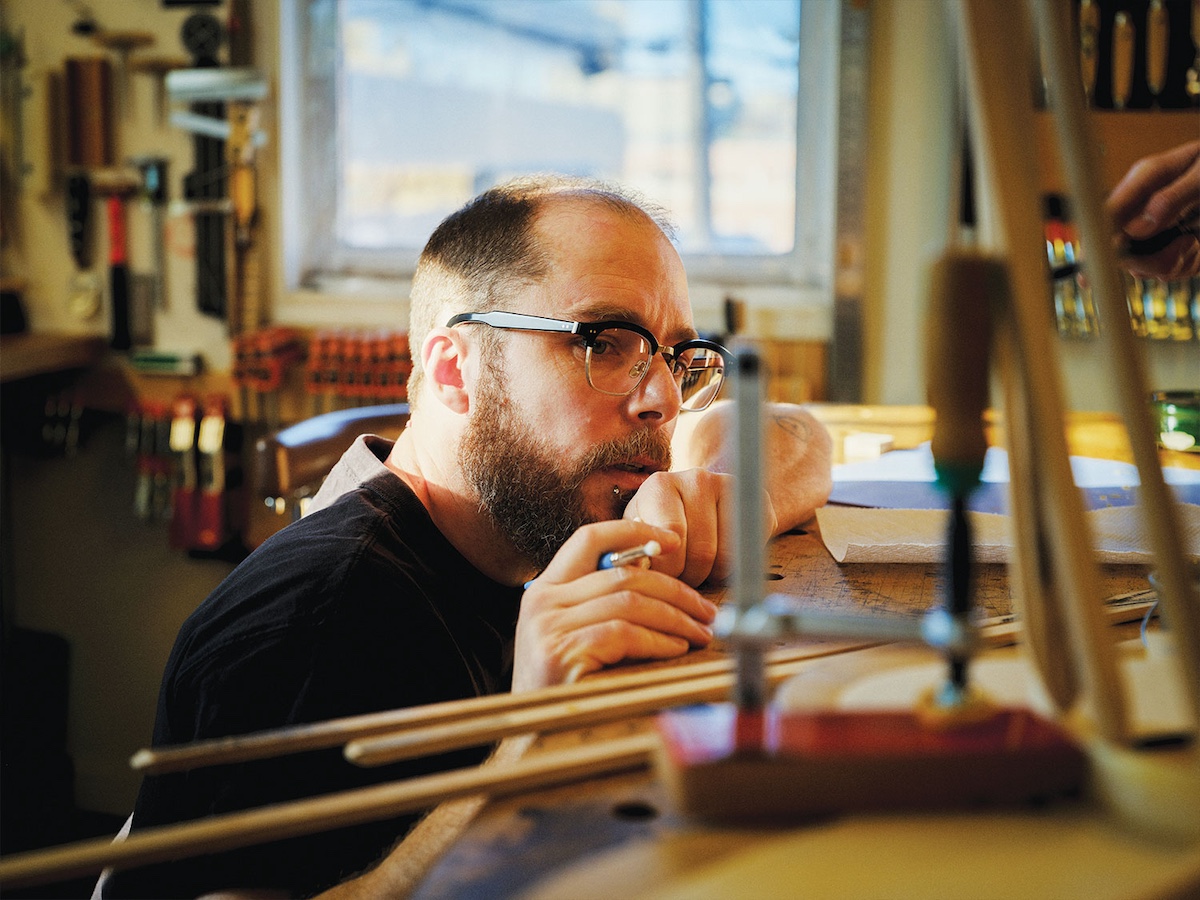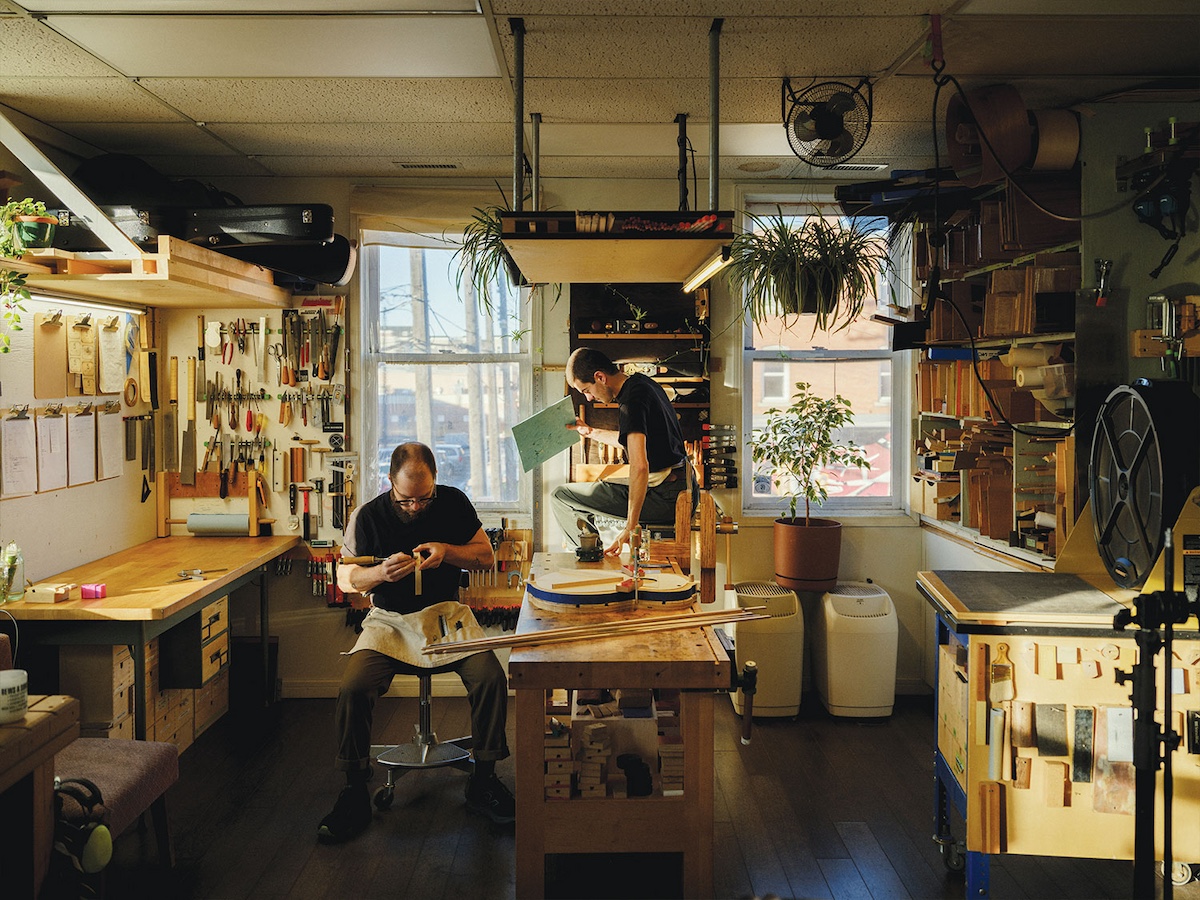

Tucked away off the busy, bar-studded streets of Whyte Avenue is the shop of luthier Dion James, specializing in guitars. There are no signs outside to let me know that a world-renowned guitar maker works here, but as I walk up the steep set of creaking stairs from the back alleyway, I am welcomed into the most beautiful workshop. The walls are lined with hand-drawn guitars, metal hand planers and sheets of wood. Windows face east, south and west, allowing the sun to trace across the room, highlighting years of expertise and craftsmanship. The space is warm and relaxing, and it feels like I’ve stepped out of time.
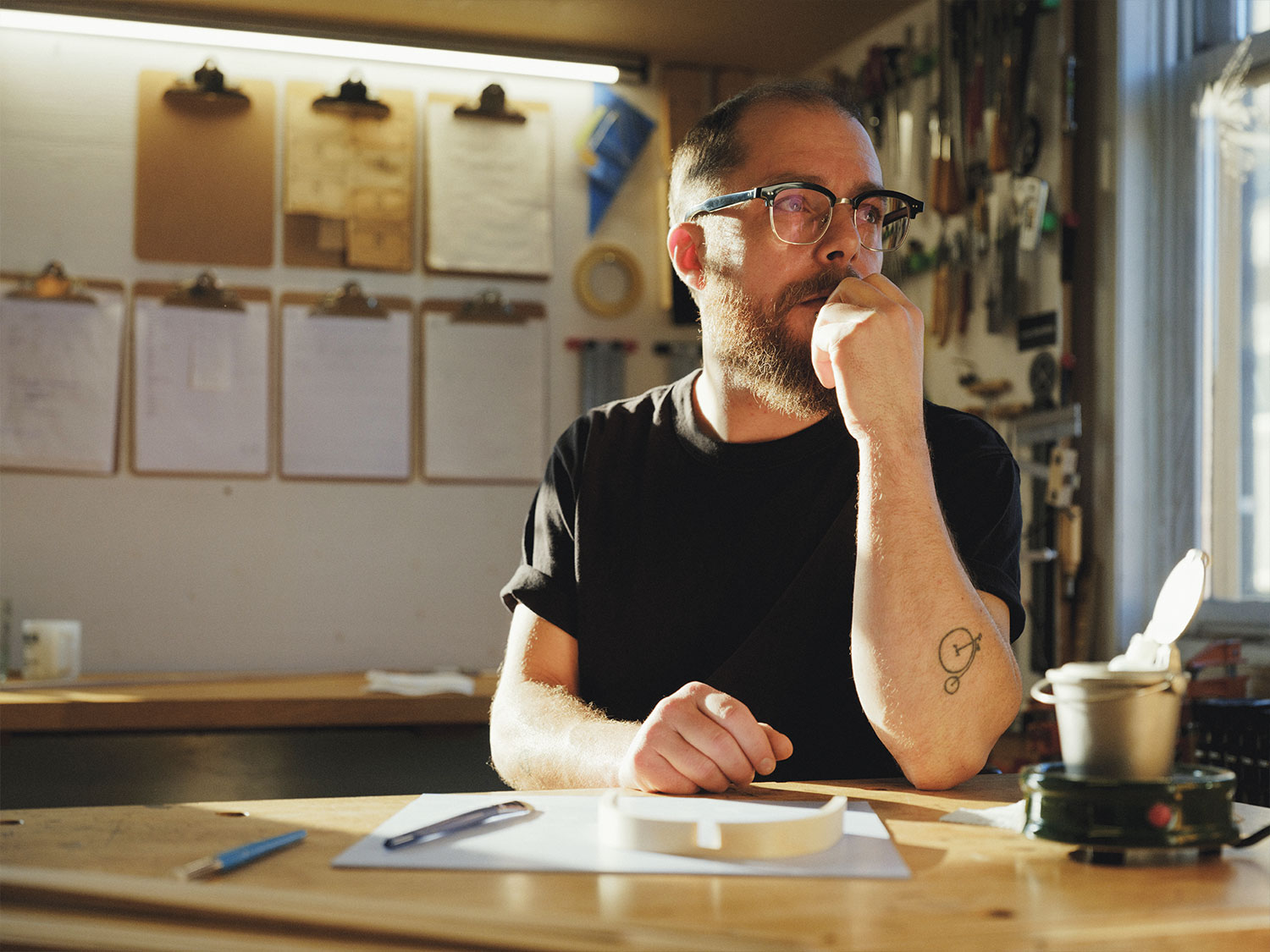
James, bespectacled and in his mid-40s, pours me a freshly brewed coffee from his French press. It’s the kind of good coffee that only comes from someone who is clearly particular about the process. As we sip this perfect cup of black coffee, I’m pulled into James’s explanation of what he does. He speaks calmly, with the voice of someone who knows exactly where he is meant to be. We talk about his process, about the types of wood he uses and about how he got into making guitars in the first place.
Born in Saskatchewan, James grew up as a hockey-playing farm boy, always tinkering with tools. As a young adult, he spent a few years in university followed by some time living and snowboarding in the mountains, returning to the farm to help with spring and fall chores. In 2004, when he was in his early 20s, he was on one of those trips home, when he and a friend discovered an old guitar. It was an ugly instrument, painted silver and left to collect dust. Curious, James decided he wanted to refinish it. Under the paint he found, to his disappointment, only plywood and plastic veneer. He thought it might be more interesting to make his own guitar. By luck, a guitar-making workshop was being held in a town 40 minutes away.
After the seven-week course, Dion continued making guitars. He sold a few to friends and family and kept refining his process. He moved to Edmonton where he met his partner Erin and the two soon moved to Montreal. James met other guitar makers there who shared their knowledge and co-op workspace, and mentored him. He realized then that making guitars could be a living for him.

Then, on a trip to New York a few years later, James naively walked into a shop with two of his guitars and asked the employee if he was interested in buying them, but the shop’s owner wasn’t there to make that decision. As James turned to leave, the sky opened and he was met by a torrential downpour. He huddled under the shop’s canopy to wait out the storm. If not for the rain, James would’ve been long gone, but while he waited, the shop owner arrived — and bought the guitars on the spot. James hasn’t looked back since.
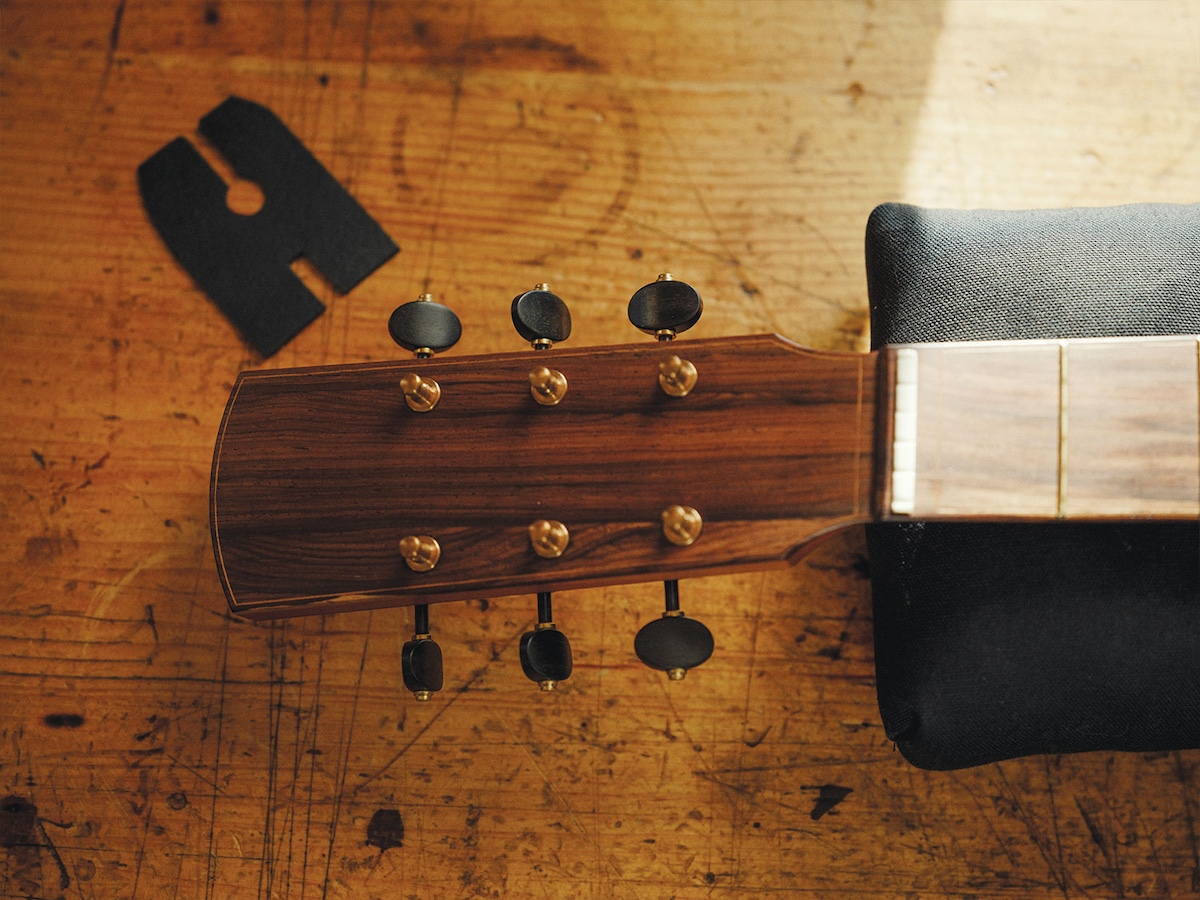
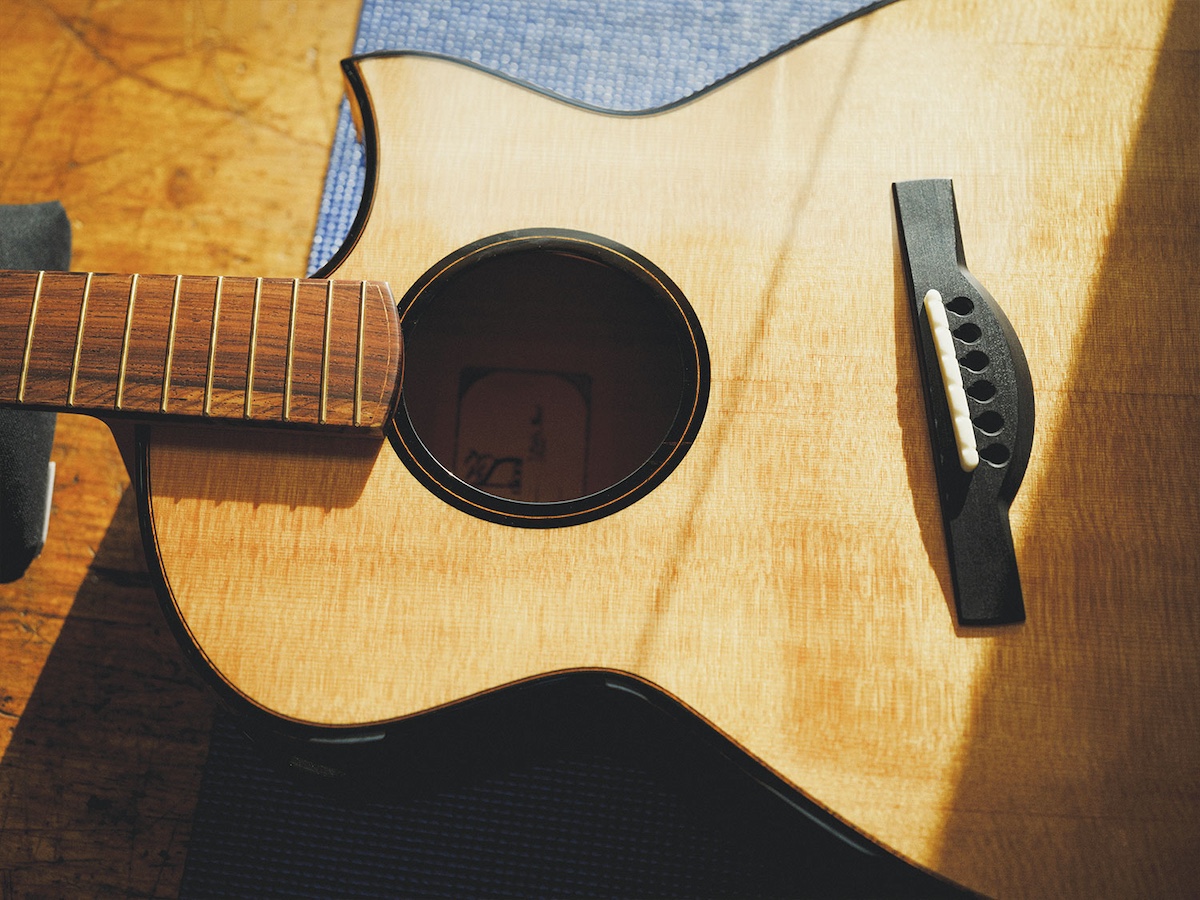
James and Erin moved back to Edmonton and, over his 21-year career (his shop is named Dion Guitars), his instruments have sold to buyers around the world. He makes everything with hand tools, which keeps his process nimble and precise but limits him to six to 10 guitars a year. He has a multi-year waiting list and with each build he continues to refine his process.
“You think every guitar is the best guitar you’ve ever made,” he tells me. “It’s not. And that just leads you back to the beginning to do it again.” It’s the never-ending pursuit that seems to sustain him.
James reaches for a piece of maple, dusty and dull from time spent on a shelf. When he pours alcohol over the wood, it comes alive, patterns emerging across the surface. The figuring in the wood, he explains, comes from a structurally inferior tree that didn’t grow straight. It bent and wandered as it reached toward the light, leaving the grain to zigzag instead of running clean. Looking at this perfectly imperfect piece of wood, I can’t help but see it as a through line to Dion James’s life and work. It’s shaped by deviation, refined by patience, and made beautiful by a quiet resolve to keep reaching for perfection.
This article appears in the June 2026 issue of Edify