

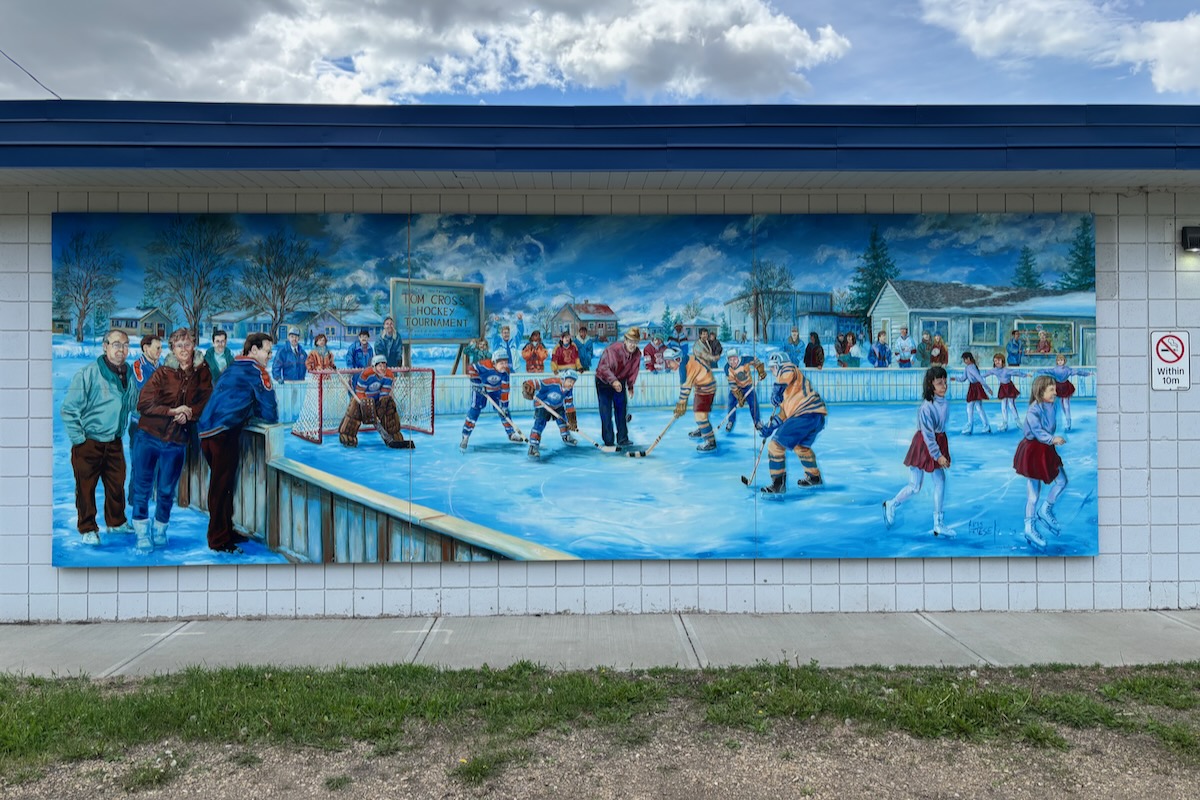
Like other aspects of Beverly, the mural program predates similar projects elsewhere in the city. Some focus on the history of the community and others signify local activities. Floden Park, for example, has seen a countless number of Beverly’s amateur sports. Kids’ sports are immortalized on the murals of the park’s rink building. On the left side, it depicts kids playing hockey, while adults watch, bundled in winter coats and sipping from travel mugs. On the right the seasons have changed, and depict baseball and soccer of yore, surrounded by images of cars, all old classics.
These are just two pieces of the Beverly Mural Project. A person could plot out all the murals and gain a decent working knowledge of the history of the community and its highlights. In addition to “Beverly Sports Champions,” there’s “Beverly Beginnings,” a 70-foot long series of vignettes on the wall of Pioneer Jewellery and Loan at 39 Street and 118 Avenue depicting the early town’s mining, mercantile and farming history. “Beverly Memories” at R.J. Scott School showcases founding enterprises of the community, including a Grand Trunk Pacific Train crossing the 1909 Cloverdale Bridge. Other murals celebrate a local dentist, community volunteers and notable events. Taken together, the images show a multifaceted and variable community.


The recent rain has turned the world green. From the swing at the edge of Floden Park, the river is high and murky, a colour somewhere between green and brown that complements the foliage leaning over its edge. Across the river, red brick buildings stand in contrast to the colour and form of their surroundings, hard straight lines amongst the leaves. These industrial buildings belong to the Gold Bar Wastewater Treatment Plant. What might otherwise interfere with the scene somehow enhances it, while further in the distance the horizon is made jagged by the skyscrapers of downtown. The swing is just two worn ropes suspending a wooden board from a tree branch, not comfortable, but the swing itself is not why anyone visits.
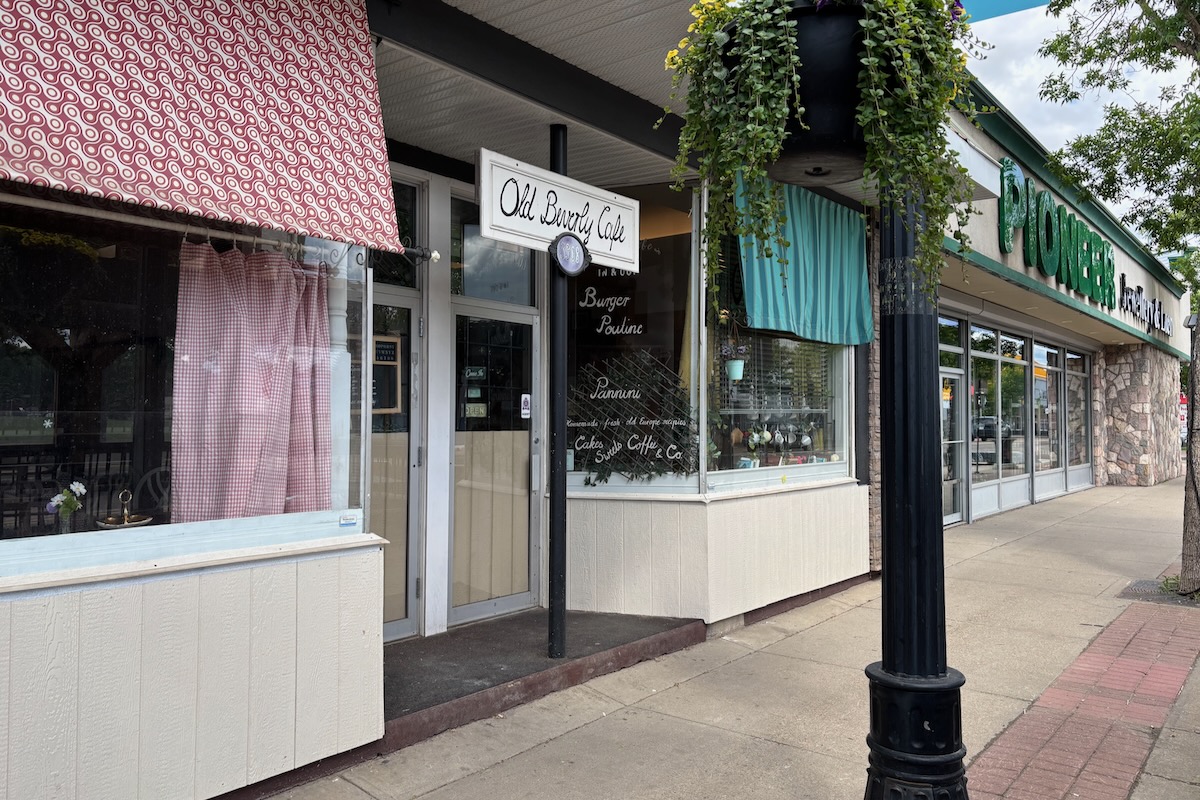
The area’s history is rich, and isn’t hard to find. Steps away from the swing is the Beverly Interpretive History Centre, which was closed when I visited but has experts available if you call ahead. Back on 118 Avenue, west of the Old Beverly Cafe, there’s another ode to neighbourhood history. Uncle Ed’s Restaurant, adorned by the kindly face of Ed Stawniczy and founded by the same Ukrainian family as Stawnichy’s Mundare Sausages.
Modern Beverly is pretty great, too. In addition to its eateries, in 2020, when the city reduced the number of workers devoted to park maintenance, community members took their own lawn mowers to trim the grass in areas like John J. Olinyk Park and make sure there was space outside for everyone. The city has been reconstructing and paving alleyways and improving street lighting in the neighbourhood with its Beverly Heights Alley Renewal project. Construction on the Beverly Heights Seniors Community started in July 2025, and will ensure community members who have lived their lives in the area will be able to stay in Beverly as the care they need increases.
If you live elsewhere in Edmonton, Beverly Heights makes a great afternoon destination to explore — it has a few stories to tell.