
Across Edmonton, COVID-19 not only shuttered businesses and hollowed out towers — it also forced some of the city’s historic buildings into a state of limbo. Among them, one of Edmonton’s most popular boutique hotels, the Union Bank Inn, Jasper Avenue’s Pendennis Building and the beloved Princess Theatre on Whyte Avenue. But as our main streets emerge from their pandemic slumber, there’s hope for these landmarks thanks to new ownership trying to breathe new life into them by giving the people what they want: gathering spaces.
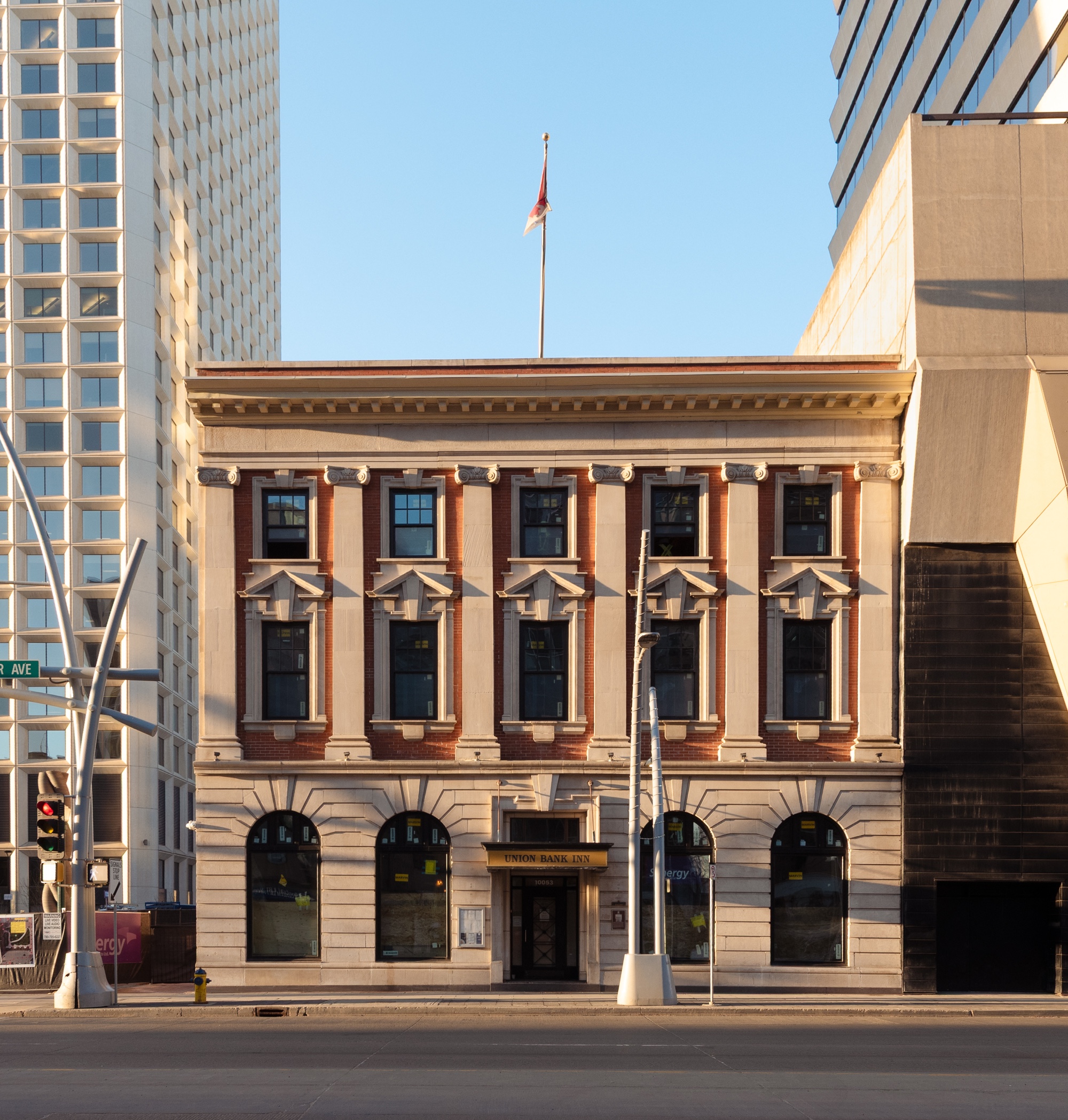
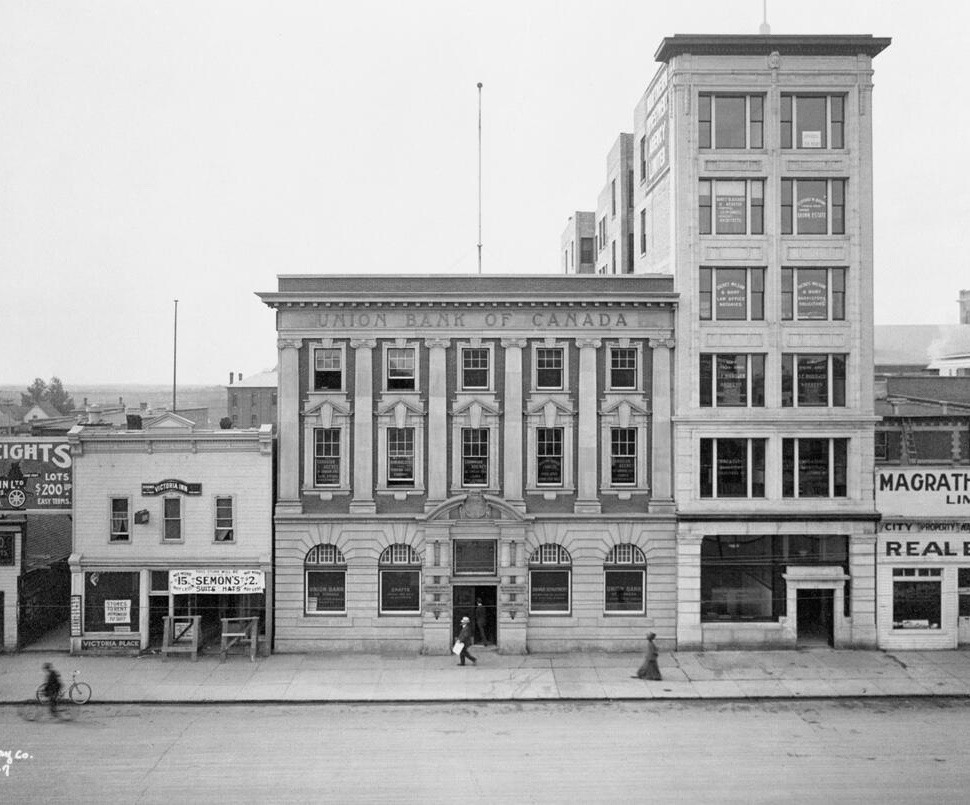
Originally built as a bank in 1910, then reborn as a hotel in 1997, the Union Bank Inn and its restaurant Madison’s Grill suffered heavily under COVID-19 travel restrictions. For six months, tourism and downtown foot traffic essentially vanished. Larger hotels held on thanks to deep financial reserves and corporate support, and steep discounts, but for an independent four-star, 40-room hotel, high fixed costs and limited access to capital made the shutdown impossible to sustain. It was barely able to survive past the spring of 2021.
Since then, downtown activity has mostly rebounded, according to a University of Toronto survey, even though office vacancies remain very high between 15.9 and 21.4 per cent. And tourism has actually increased, according to Alberta Tourism. (To what extent the Oilers play-off runs contributed to that is TBD.) So it might come as a surprise then to learn that the new owner of the Union Bank isn’t reviving it as a hotel, but rather as more offices. To be fair though, it’s to accommodate his growing wealth management corporation Union Financial, renamed to match the history of its new home.
As with any historic building, renovations are in order — a new and modern mechanical system, a new roof replacing one nearing the end of its life. But by and large, owner David Hawreluk says it was in great shape. The only problem was that it wasn’t historic enough.
That’s because in the late ’90s, the interior was entirely gutted when the building was transformed to a hotel. Few, if any, historic fixtures were preserved. Hawreluk says he wants to resurrect its old spirit by recreating the past from scratch: hardwood floors, marble finishes, intricate moldings and dark wood paneling to evoke the elegance of a bygone era. Even small details, like elevator dials designed to mimic early 20th-century indicators, are part of the immersive experience.

“When you walk back into the space, it’s going to be like ‘Oh my God, look how they preserved the old building,’” Hawreluk says. “But, everything is going to be brand new.”
The downside is most people won’t be able to just waltz into Union Financial headquarters to enjoy the aesthetics, and it’s hard not to feel a sense of loss given the shrinking stock of boutique hotels. But there’s still some public spaces planned for the Union, thanks to a partnership with Sabor Restaurant Group. The company will add Roca, a high-end take on Iberian seafood, on the main floor, while also managing private dining in the basement and catering for an event venue on the second floor. It’s all on track for an April 2026 grand opening.
Unlike the Union, the Pendennis Building was already in a state of limbo before the pandemic.
The building was to be developed into the Ukrainian Canadian Archives Museum, but these plans fell through. In 2017, one of the museum’s board members, Lorraine Bodnarek, president of LEDR Developments, bought the building from the museum with her husband Ed Cyrankiewicz, founder of Delnor Construction. The power couple hoped to revive the idea of the Ukrainian archives but ran into “differences of opinion” within the board. Bodnarek and her husband then planned to house a California tech company’s expansion into the city. Then came the pandemic and, well… not exactly the best time to take occupancy. The owners pivoted again.
This time they collaborated with the Downtown Business Association and Edmonton Chamber of Commerce to create a new events space. According to Bodnarek, Pendennis Weddings and Events, which occupies the top half of the four-storey building, hosted about 200 events last year, ranging from corporate gatherings to theatre productions.
Any similarities to the Union Bank end there. While the hotel was acquired in great shape, the Pendennis had aged out of charm and into concern. Six years of languishing will do that to an old building. The LEDR–Delnor workers had to delicately manage the presence of people and animals sheltering inside. Then it was modernized with a larger elevator and a custom lighting system that highlights the original brickwork. On the plus side, there was still much historic charm for the renovation team to preserve. And that they did, restoring the brick facade and reconstructing irreparable features.



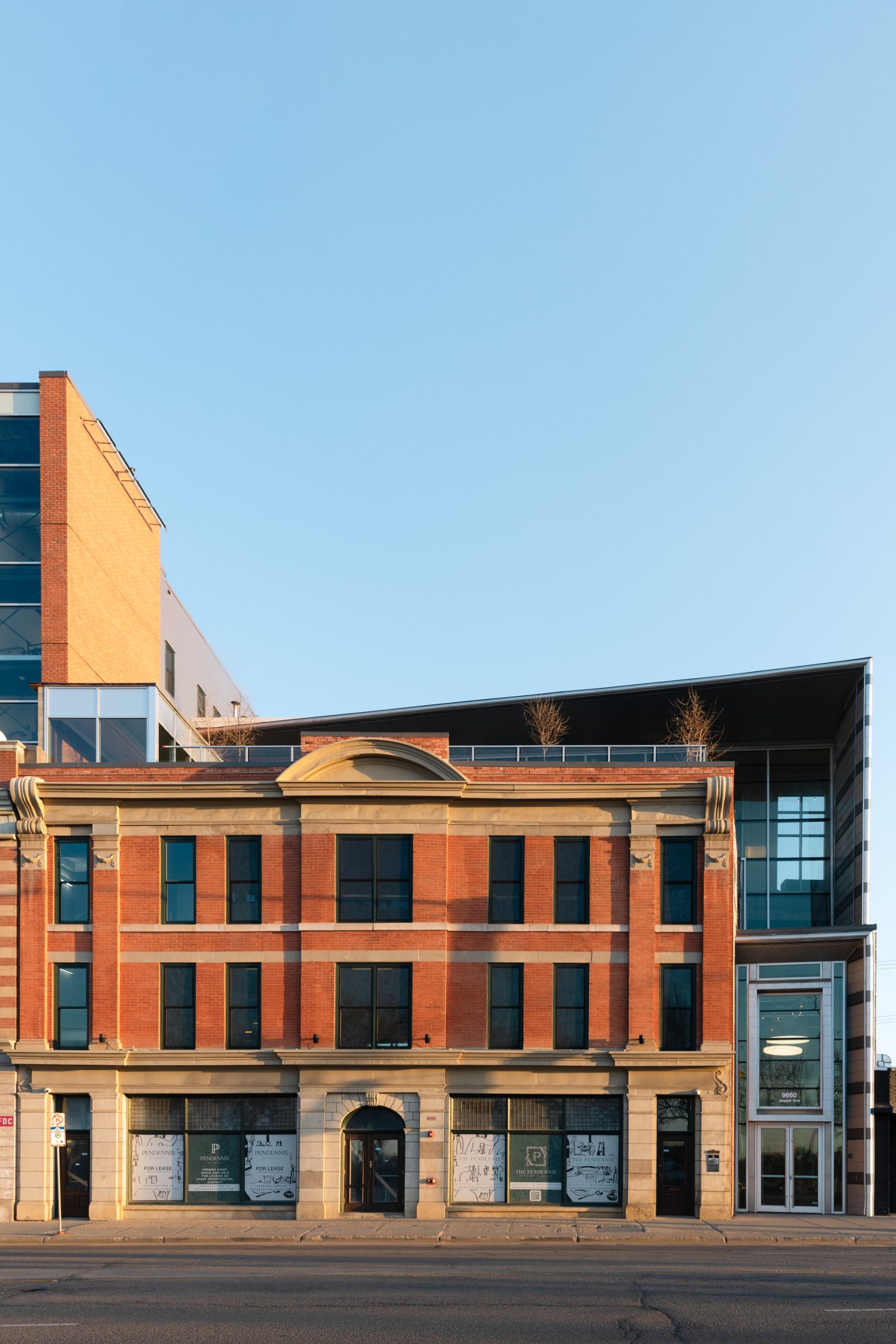
“All the building’s operational elements are brand new,” says Bodnarek, “but the building still looks like it’s from 1911, so we’ve kind of married those two amazing components.”
The main and second floors are still vacant though. Similar to Hawreluk’s strategy, Bodnarek is courting restaurant groups to anchor the space. As for the storey above, the owners dream of making it into a hub for architecture and design, imagining a hybrid showroom-gallery. In fact, the Pendennis hosted several events for Edmonton Design Week last year.
One of the biggest cultural losses from the pandemic was the Princess Theatre. Built in 1914, Edmonton’s premier independent cinema had two screens beloved by cinephiles, especially new parents in the “crying room” — a soundproof room at the back of the theatre with a changing table. It held on for 14 months after movie theatres reopened, but the industry suffered too many blows for the owners to keep operating. The ghost of its final screening — The Rocky Horror Picture Show in October 2021 — still lingers on the marquee.
As of late, the theatre’s only spectators have been the oglers passing around its MLS listing (it’s currently priced for $2.7 million). While some have shown genuine interest, the owners turned them down out of determination to uphold the Princess Theatre’s legacy as a thriving arts hub. Then, earlier this year, eclectic businessowner David Stupnikoff approached them with a plan to convert the Princess Theatre into — you guessed it — an event space. The main floor theatre, Princess 1, would become a stage venue for concerts, plays and comedy shows, while the 90-seat Princess II downstairs would remain a movie house.
Restoration work on the Princess Theatre is largely dependent on development permits and architectural assessments, but the building itself requires relatively minimal structural changes. The bigger concerns are potential asbestos in the flooring, and accessibility upgrades and decisions. Along with all the technical upgrades for the venue, restorations and modernization is estimated to cost a whopping $9.2 million.



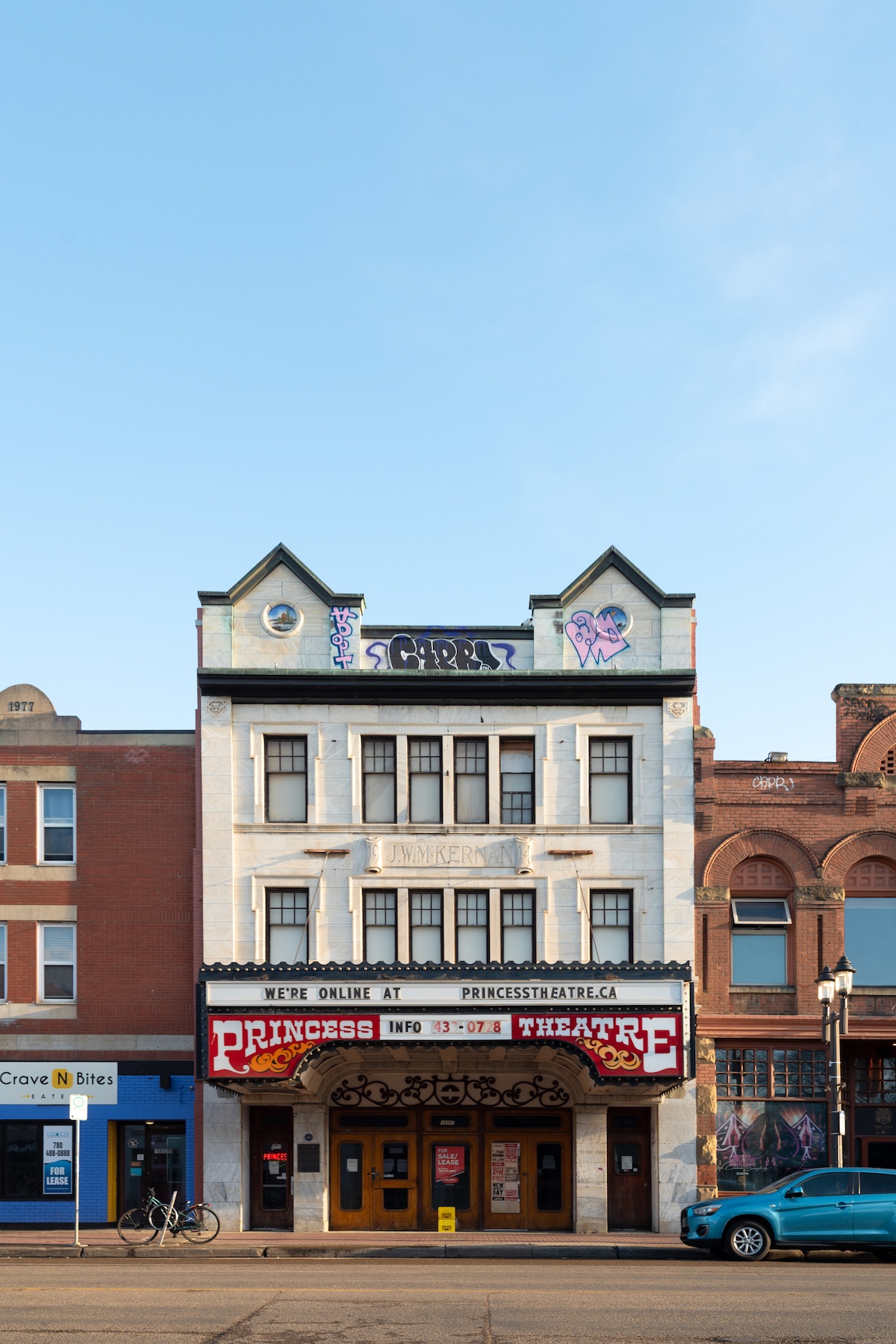
Stupnikoff launched a fundraising campaign in February to much enthusiasm, but that has not translated into dollars. As of May, they’ve raised less than 1 per cent of the goal. He is hoping corporate donors will step up, and says they have already secured a donor promising almost $3 million.
Owning a heritage building in Alberta can be a rewarding way to preserve local history, but it comes with its own bureaucratic maze. From regulatory approvals to costly code compliance, here are some key hurdles that owners often face.
Maintaining heritage features — such as restoring original brickwork or preserving period woodwork — can be significantly more expensive than standard construction, especially when specialized materials and trades are required. Lorraine Bodnarek estimates that renovations of the Pendennis Building, which aim to preserve historical elements and aesthetics, typically cost about three times more than conventional construction.
Bringing heritage buildings up to modern safety, accessibility and energy codes (e.g., adding elevators, accessible washrooms, HVAC and fire suppression systems) often requires creative — and costly — workarounds to avoid damaging protected features. All three of the mentioned historic buildings have navigated this architectural tightrope.
Renovations, even minor ones like replacing windows or updating signage, often require heritage permits. These permits go through multiple layers of municipal review and can significantly delay timelines.
This article appears in the June 2025 issue of Edify