
There’s a balance when it comes to designing — or redesigning — buildings on a campus as old as that of the University of Alberta. On one hand, the buildings themselves hold history and charm, and on the other, modern design has evolved over time, especially when it comes to air flow, natural light and open spaces. The University Commons building lands right at the overlap of the two, preserving aspects of the original Medical Building from 1921, while expanding it with a tower and offices, classrooms and collaborative spaces that are at home in 2026.
“It’s quite a picturesque building,” says Kelly Hopkin, the university’s manager of architecture. “Yet it’s a hard one to understand, in a sense, until you actually get in there and see it, because of some of the shapes and the way it’s been put together.” He describes the new building as the “front door of the university” because of its central location just off the transit loop at 112 Street and 89 Avenue.
First called the Medical Building then renamed the Dentistry/Pharmacy Centre in 1972, it had been sitting empty for 10 years before construction on the University Commons project started in 2020. It had various temporary tenants — a class here, an office there — but now it’s ready to take on a prominent role in campus life.
“We looked for features that were in the old building and how we could bring forms and feeling and textures into the new, and tie them together,” Hopkin says, explaining the process of marrying old architecture with a new, modern glass-and-concrete tower. He says the U of A’s design team took inspiration from other institutions that have done similar merging of old and new. “A lot of that was done through careful planning, respect of the character spaces that were already inherent in the old building, how to bring that feeling and that character into the new so that you didn’t have a stark contrast.”

Zeidler Architecture was brought on board the University Commons project in 2022, after the shell of the building had been constructed. Their job was to finish the inside of the structure, which meant making decisions on how people could use the space, how light played through it and the general design language.
“When we were brought in, we tried to create a theme and a concept that drove the design — that was expansive,” James Brown, a partner with Zeidler who worked on the project, says. The project is supposed to be bigger than a single faculty, and has services that are used by students from all over the university, such as the registrar’s office. The team embraced “this idea of bringing the landscape and relationships to the land into the building,” Brown says. “That also tied into the university’s interest in bringing in Indigenous voices as well.”
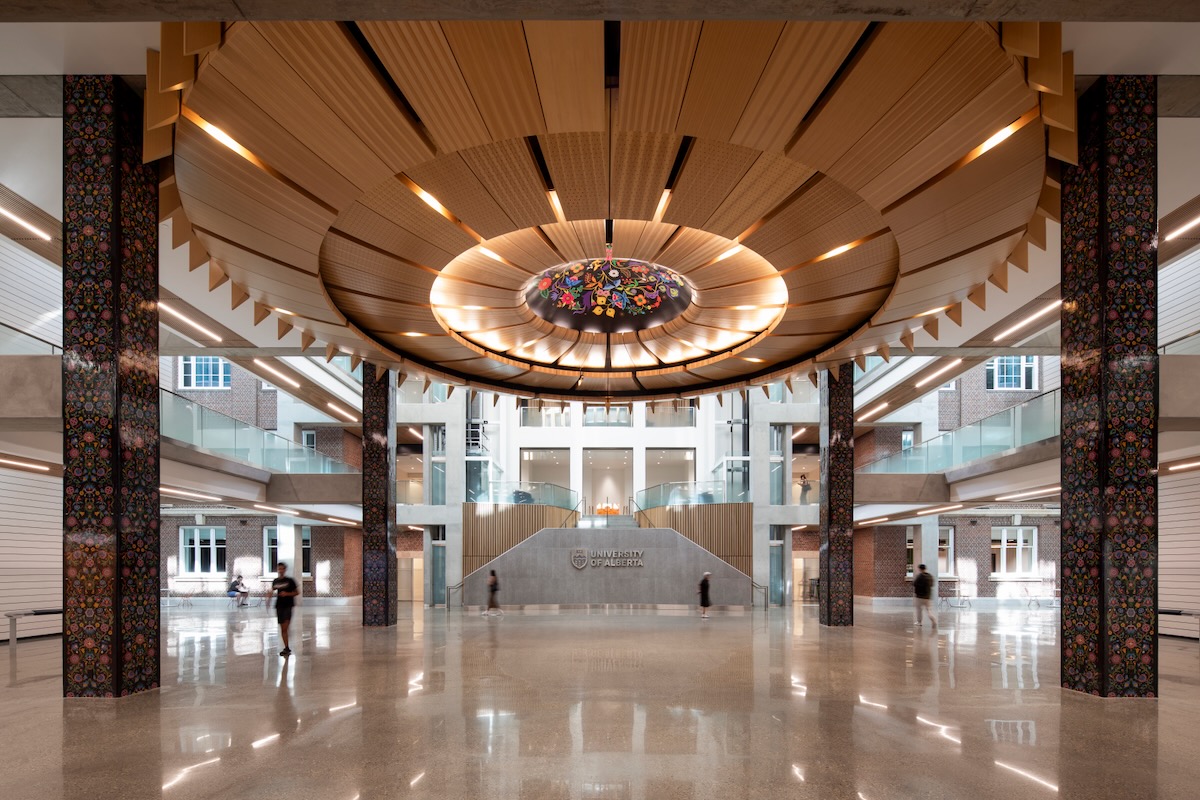
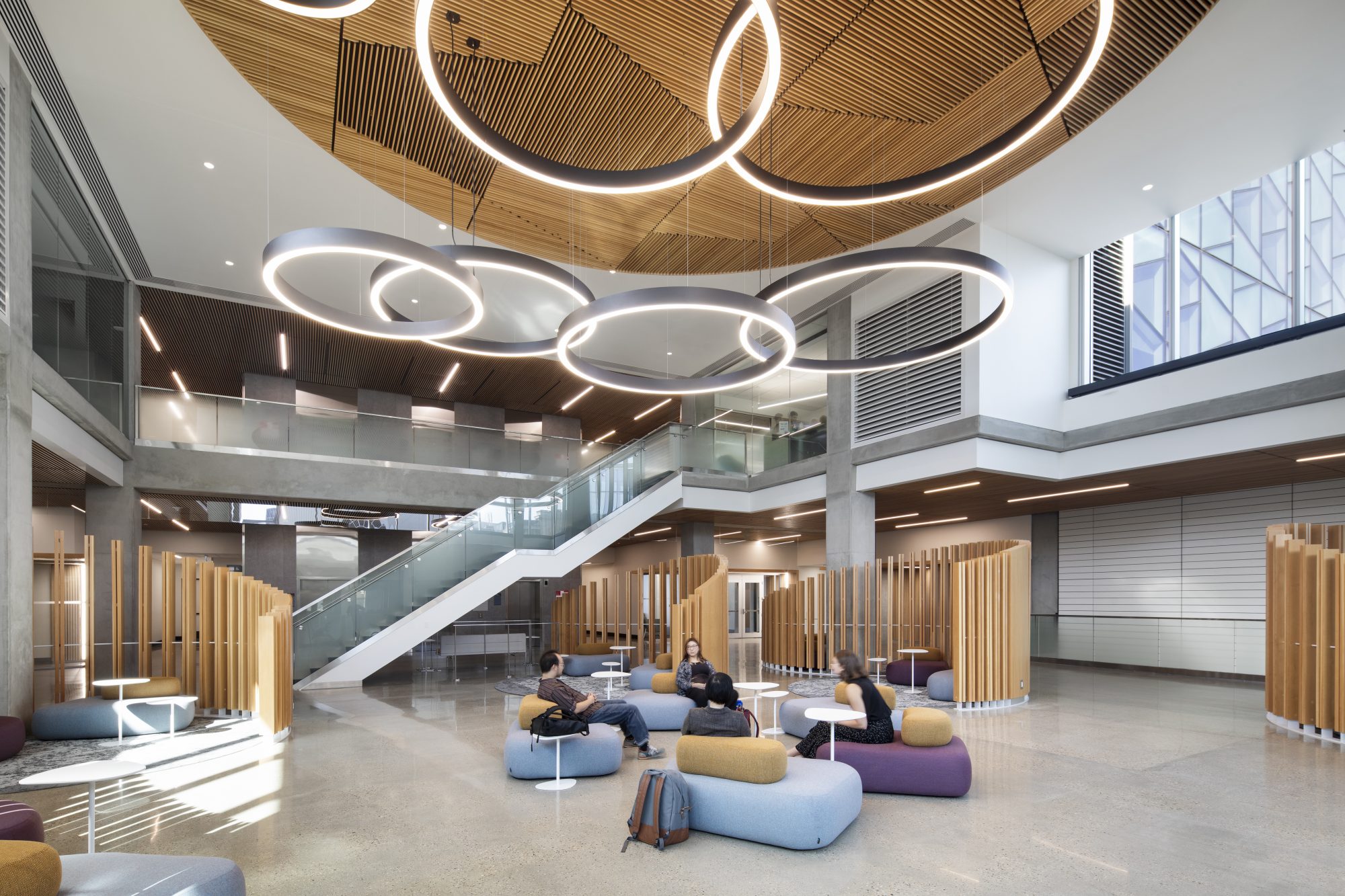
To make sure that University Commons would feel open to all of the university community they made it physically open, featuring large atria with expansive seating and gathering areas; meeting areas with double-height ceilings and windows; and natural elements and art woven throughout. The idea, Brown says, was to evoke the feeling of sitting and learning under a tree. Other nature-inspired design elements in University Commons include hanging wooden gliders made to resemble folded leaves and the four corners of the tower section being themed as the four seasons.
Brown says the group created metaphorical structures to help animate the space. “They have different functions to break up some of the light coming in, to warm up the space, make it less institutional,” he says, “and to bring down the scale of these spaces so they make it a little more intimate.”
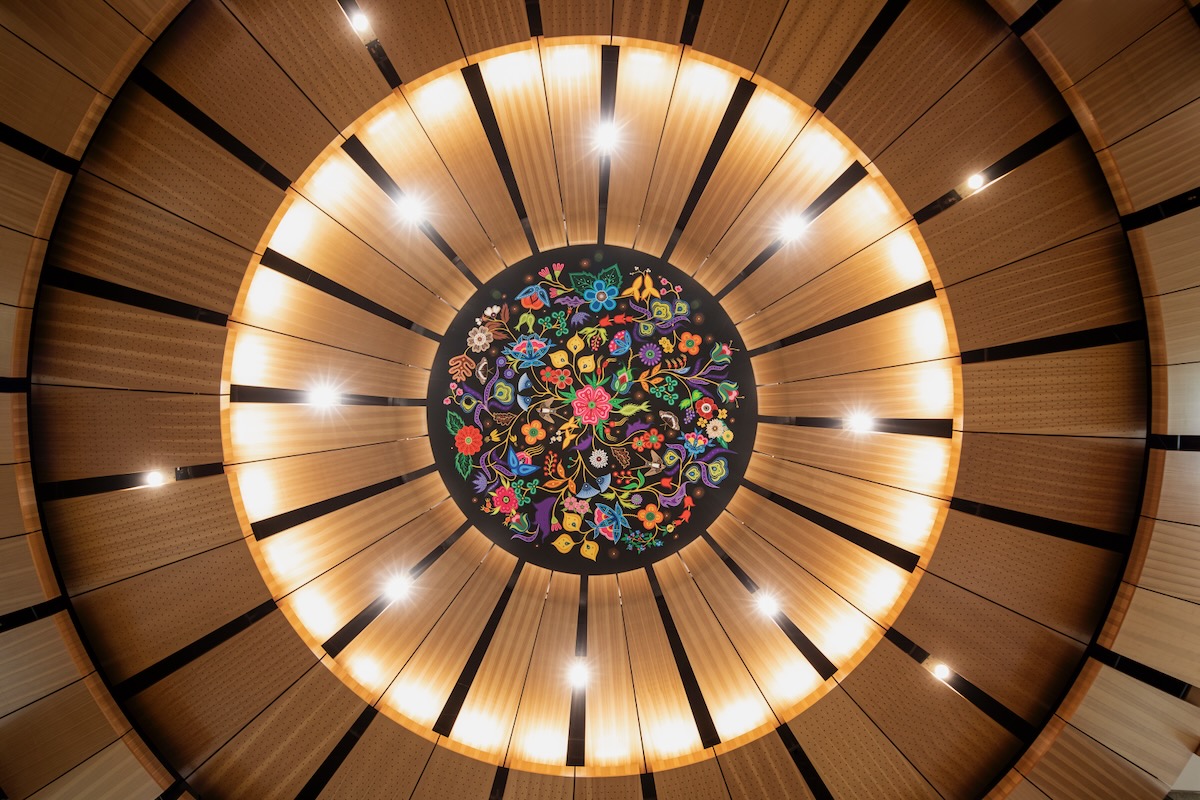
The Zeidler team worked with Métis artist Christi Belcourt to paint the inner dome of the first-floor atrium to introduce elements of Indigenous art to the building. They took inspiration from her art for other areas as well, such as acoustic panelling in a meeting room from the original medical building. Brown says the contrast between the nature-inspired art in the colonial-British-architectural space is another way that the building communicates its intent: a conversation between past and present, but also between the institution and nature.


“We were quite excited when we learned that the president’s office and executive were moving in, and we made a conscious attempt to make the space less institutional and more connected to nature,” Brown says. “They’re making an enormous number of decisions in those spaces. We wanted them to feel like they were looking beyond the institution, right? They have this responsibility for a greater world.”
The University Commons building opened to the public in September 2025, offering new spaces for faculty, students and other members of the university community to gather, meet and learn.
For manager of architecture Kelly Hopkin, that idea extends to people who come through the building. “It’s a hybrid building in the sense that it’s not an art building or a science building,” he says. “It’s a space that brings a lot of people from all around campus because it’s literally right at the heart of campus.”