

Abbi Davidson moved around a lot before she turned 17. She grew up in foster care and sometimes stayed with family members, but she always craved stability. Her rooms were temporary resting places just until the next move. Getting out of the system and finally into a place she was able to call her own felt like a safe haven.
To some, renting might not imply permanence, but it was the most stable thing she had experienced. Renting meant security. Renting meant freedom.
Even now, at 26, Davidson’s mentality about housing has not changed. She has been renting her current apartment, north of MacEwan University, for the last eight years. As a fully licensed stylist, she frequently travels the world to further her education in hair. She says a mortgage would trap her. “I am not trying to build equity,” she says. “I am trying to find security in knowing I can change my mind at any minute and not be worried about legal, mortgage and real estate commission fees.”
Owning a home would not contribute to her peace of mind, she says, even though it’s the right choice for others. “A mortgage is still debt,” says Davidson. “When I think of saving for retirement, I know all my savings are my own and they are not just going into minimizing debt.”
According to popular belief, you are throwing your money away by renting. But owning a home isn’t cheap either. It is not just the mortgage that you are paying down. “If I owned a home, it wouldn’t be a new one, so I would have to do some renovations,” says Davidson. Aside from physical repairs, there is mortgage interest, property taxes, property insurance and external property maintenance to consider.
Are renters on to something, or is home ownership still the best route to safety and security? The simple answer is there’s no simple answer.
As the number of people renting in Edmonton grows (and it is growing: one in three people in the city are now renting) more of them are also renting for longer periods. The arguments they make in favour of this decision centre around reclaiming their financial and emotional freedom. They maintain that renting is more flexible than home ownership: moving is easier, and having a landlord or maintenance team removes the stress of repairs. While maintenance may be built into the cost of rent, there is no unexpected repair bill for renters.

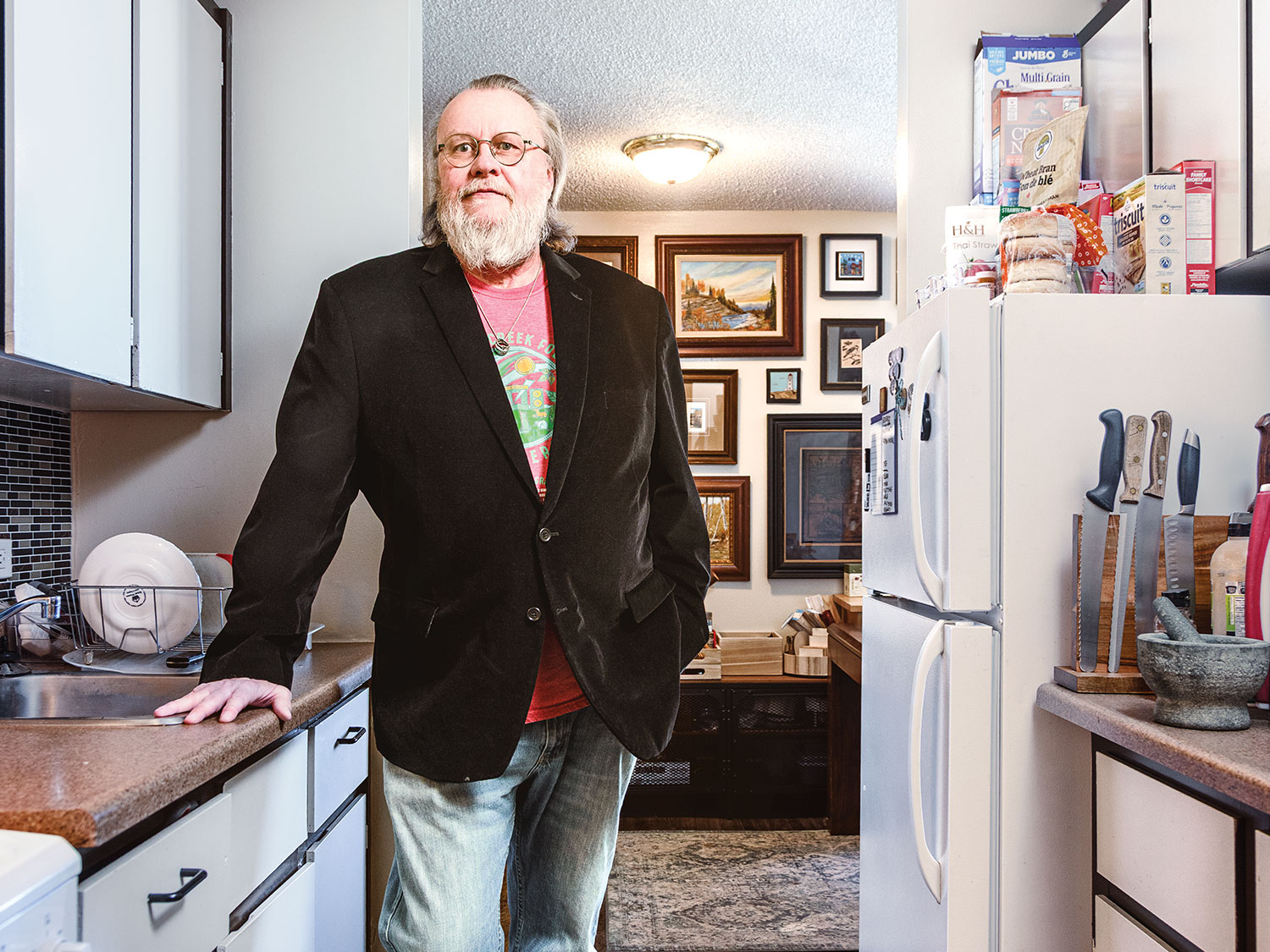
Davidson is lucky to have an excellent relationship with her landlord who, she says, has been understanding of her financial struggles during rare unemployment and has always worked quickly to get repairs done. But this is not always the case. Renting means you can’t always put the fate of your home in the hands of your landlord, but you should still feel secure in the protections you have as a renter. “I know my renter’s rights and everyone should too,” she says. “My first landlord would not give me my deposit back, so I filed a complaint to the Alberta Tenant Board and it was addressed within a year, which was quicker than I thought.”
All these renters need a place to turn to when they have questions. That’s where the Tenant Support Service, previously called the Landlord and Tenant Advisory Board, comes in. Caitlin Beaton is the program manager of homelessness prevention with the city, tenant support is also under her portfolio.
“My advice would be the same if you’re a long-term or short-term renter,” Beaton says. “Knowledge is power. So if renting is the choice that you’ve made, make sure that you know your rights and responsibilities. Communication is king. And make sure that any communications with the landlord are being documented.”
Documenting your interactions is for the benefit of both sides of the landlord-tenant relationship, so that both are aware of any problems that might arise with the rental unit: think of problems with appliances or heating and plumbing. Record keeping helps to make sure that renters’ concerns are being answered and that they’re taking responsibility and letting the landlord know about any problems needing to be addressed, whether it’s as simple as a broken dryer or more complex, like pests.
Tim Holman‘s life changed when his wife passed away in 2019.
Holman is a 60-year-old who lived and raised his kids in a house that he owned. He decided after his wife died and his kids moved out that he no longer wanted the responsibility of taking care of a house.



Following a brief stint of unemployment after being laid off during the pandemic, Holman made a childhood dream a reality. Ever since he was a child he wanted to live in a downtown apartment, up high. He found an apartment in Wîhkwêntôwin that checked all the right boxes — something higher up with a view and two bedrooms for more space. While he wanted to downsize from his house, he still wanted some space for his bookshelves of fantasy novels and other collections, and some space to hang photos.
“We have a gym, there’s laundry on every other floor,” Holman says, speaking of the building’s amenities. “I don’t pay for heat, I don’t pay for electricity.” He says he loves being able to walk to nearby coffee shops, restaurants and parks.
He made other lifestyle changes along with the move, selling his car and opting to walk to the grocery store and take the bus to work. When he wants to get out of town for a few days he rents a vehicle, which by his calculation costs less than the day-to-day upkeep of car ownership, such as fuel, insurance and maintenance.
“For my generation, you weren’t a success until you owned a house as a Gen X, right?” Holman says. “My kids can’t afford to buy a home, so they don’t have that same sort of pressure on them. I think it’s more along the lines of they’d like to have one, but there’s not the pressure to. It isn’t as intense as it used to be, mainly because it’s just so hard to buy a house.”
Lots of people moving around or into Edmonton share Holman’s line of thinking. It’s something that developers are noticing — and taking into consideration when they start new projects.
Bill Blais, president and CEO of Maclab Development Group, says that while Edmonton is still known for being one of the most affordable places to buy a home in the country, that also means it’s one of the most affordable places to rent in the country. “We have stories of three generations sometimes living in our rental properties as they’ve grown up. It’s not necessarily new, but it certainly is a bigger part of the market, that interest in renting for a longer part of people’s lives.”


In addition to people already living in Edmonton making the transition to renting, Blais says new developments are attracting people from cities like Toronto and Vancouver, who are seeking the same sort of urban lifestyle and rental complexes that they experienced there.
It’s not just tenants who can reap the benefits of long-term renting. For the developers and building managers there are upsides as well. People who live in buildings for longer periods of time get to know the building and the other people in it. Blais says Maclab has found that it builds community, and the longer a tenant stays in a building the more they become something of an ambassador for that building.
As they near their 60s, Lori-Anne Bond says she and her husband Ken have come to understand the disadvantages of home ownership in their particular situation. They currently own a house in Allendale, but over the years they have moved five times, purchasing each time and losing equity along the way.
“You are just taking on more debt,” says Bond. “We both make good money, but all of it is going towards paying off the mortgage, the taxes, the upkeep.” With their children off to university, and having had enough of the extra debt, they recently decided to sell their house. They’ll look for a dog-friendly rental with access to the river valley — maybe in Bonnie Doon or Glenora — after the sale is complete.
Like many other homeowners, the Bonds have bought into the home-ownership myth: buying a house is a guaranteed investment.
“If only we had rented instead of buying houses, we wouldn’t be in this position,” says Bond.
The Bonds are familiar with the financial pitfalls of frequently purchasing and financing a new home. While securing the lowest mortgage rate is ideal, it often means a 25-year amortization period. “Our first house was $170,000 and the house we own now is half a million dollars. If we hadn’t moved the first time, we would’ve had over $400,000 in equity,” she says. But staying put was unrealistic for the couple; they had to move due to Ken’s government job transferring him. Renting would have saved them equity loss in the long run.


Instead of forced equity through mortgage payments, you can build wealth through stocks, exchange-traded funds and retirement accounts. “When you sit down with a financial advisor, you feel like a loser for having some debt and then they actually show you all your assets and you realize you are not as bad as you thought you were,” says Bond. “Your house is just a part of your wealth.”
Marshall McAlister, president of North Road Investment Counsel, says the societal misconception that you are throwing your money away by renting isn’t true. By choosing to rent you might acquire a better lifestyle and more savings. McAlister is pro-renting but he is clear that you need to consider your own situation before choosing renting over buying a home. This is a conversation he is always ready to have with his clients.
“If you were to invest the money you save on insurance, taxes and maintenance as a homeowner in capital markets there could be an economic argument that you could build more wealth,” he says.
McAlister adds that there is not an economic argument that home ownership will grow faster than inflation. If we look at the returns of homes in real estate across many decades in Canada, we are going to see a return pattern similar to inflation. “There have been times when the explosion of real estate value has tilted the odds in favour of the homeowner, but what do we know about prices of real estate in the next five, 10 or 20 years? We don’t know what they will be,” he says. “There is no guarantee you are going to get rich from owning a home.”
It is also not uncommon to switch homes throughout your life. But something people don’t tend to consider is the expensive cost of transacting in real estate. “If you should not be totally committed to the location you are living in, or to your career, it might make more sense for somebody to rent,” McAlister explains.
It took Lori-Anne and Ken Bond years to come to terms with the fact that, “A house does not necessarily equal happiness,” she says. That’s a realization that other Edmontonians are coming to, just like Davidson and Holman.



“You are taught that you are not successful unless you own a house,” says Bond. She defines success differently now: “Being safe, happy and secure.”
Abbi Davidson agrees. “Stability comes in the form of less stress and less worry,” she says. “Renting has empowered me and motivated me to take more risks in my career and in life, I don’t have to be committed to anything.”
For her, that emotional reassurance is more valuable than home equity.
This article appears in the June 2026 issue of Edify