
The world is changing in the wake of the Second World War. Germany is a divided country, partitioned by the Inner German Border, a no man’s land demarcating the territories of the Cold War’s occupying powers. While sections are fortified, the majority is a clear-cut strip of land patrolled by guards on either side and monitored by watchtowers.
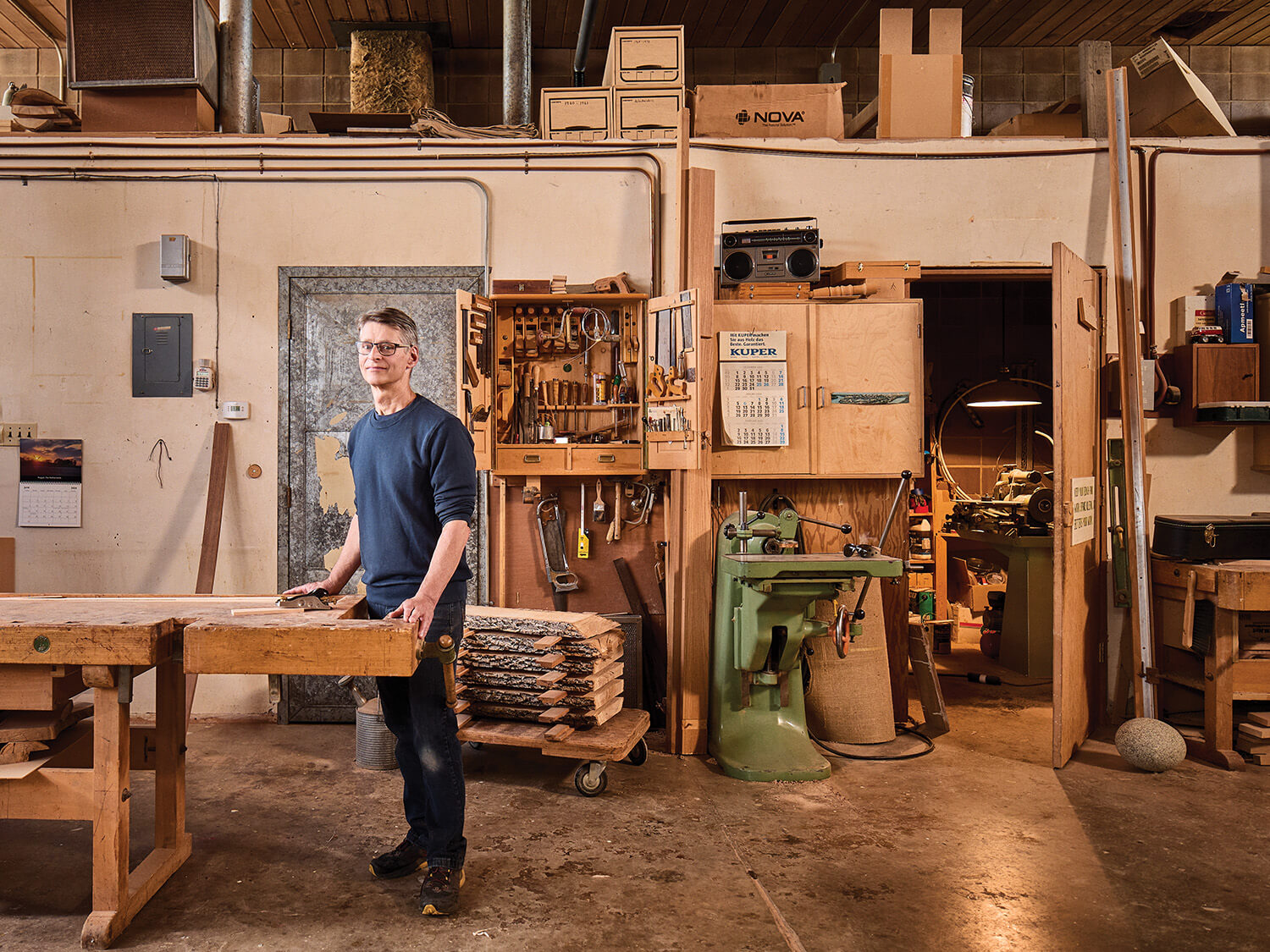
Eberhard Reichenbach is 19 years old, and has just finished his apprenticeship as a cabinetmaker. A friend warns him that bad times are coming for Soviet-occupied Germany, and that Eberhard should get out. An older tradesperson supplies the teen with the means to escape — forged documentation saying he needs to do some carpentry work near the border.
He puts the plan into motion, loading his tools onto his bike and riding as close as he can to the wooded area near no man’s land. When the terrain gets too difficult for his bike, Eberhard ditches it and continues on foot, hiding and sleeping during the day and belly crawling through the underbrush at night to avoid passing soldiers.
Finally he reaches the expanse between east and west, 500 metres across. He can see the American forces posted on the far side, and does his best to learn the patterns of the guards. He sees his opportunity and sprints into the open.
Both sides see Eberhard, and the Soviets open fire, while the Americans reach out to collect the young refugee. It’s a good thing he stands only 5-3, or he’d have made an easier target.
Ralph Reichenbach, Eberhard’s son, eases into one of Bay 1 Gallery’s chairs, orange leather stretched over a wooden frame. Reichenbach is dressed in jeans and a T-shirt, and he speaks slowly and deliberately, recounting the tale of his father’s escape from Soviet-occupied East Germany.
Eberhard’s path took him to West Germany, then across the Atlantic to St. John’s, then by train to Edmonton. In 1954 he started Eberhard’s Custom Woodwork out of a double garage in Parkallen. In 1961 he built a shop off Argyll Road in the Rosedale Industrial area and moved the business. He renamed it Eberhard’s Manufacturing and the 5,000-square-foot shop grew to 24,000 square feet. In some ways, Reichenbach grew up there, too.

Bay 1 Gallery is located inside the facility’s first loading dock. Reichenbach and his wife, Tricia DeJulia, opened it in 2020 to showcase the work of fellow artisans and artists in Alberta, specifically fine woodworkers.
The gallery itself smells of wood chips as you enter through the tall wooden door. The brick walls are painted white, the high ceiling is black corrugated metal hung with gallery lighting, and the cement floor is polished to a sheen. Bay 1’s design reminds you of the building’s industrial roots without taking over from the art pieces it houses.
Naming the space was easy. “We kept saying, ‘Put that in Bay 1’ or ‘I’m gonna bring drywall into Bay 1.’ The name just stuck,” Reichenbach explains. Now he runs Eberhard’s Manufacturing, and with DeJulia, both operate the gallery.
Reichenbach started basic woodworking and furniture making when he was still a kid, and started working in the manufacturing shop with his two older sisters when he was old enough. Running Eberhard’s Manufacturing fell to him in 2012 when his mother passed and neither of his older sisters wanted to take over the family business, so he switched from a career of teaching at NAIT to manufacturing.
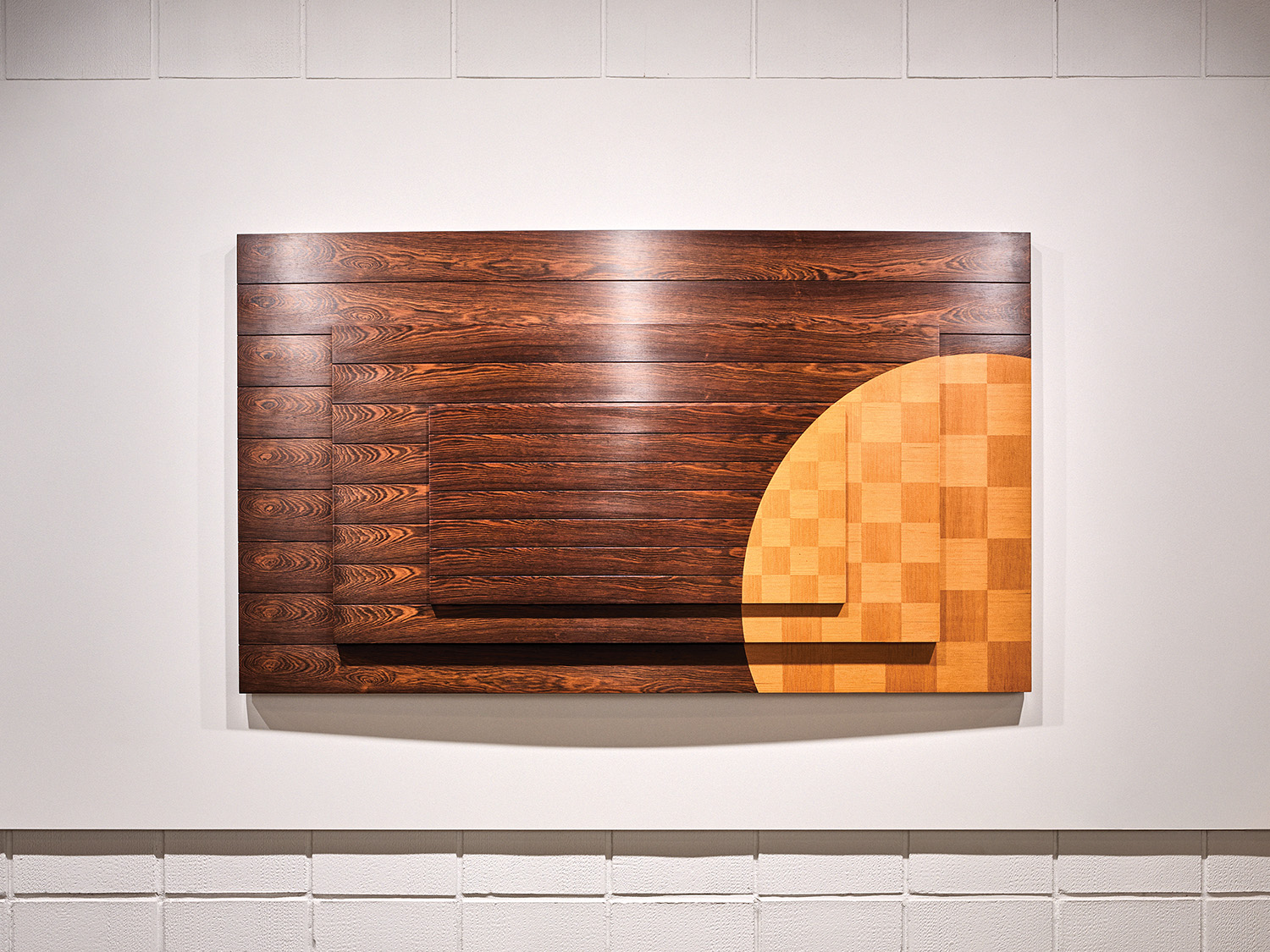
As for the gallery, Reichenbach started Bay 1 as a celebration of fine craftsmanship in Alberta. It’s home to artworks and everyday items like furniture — and those pieces that blur the line between the two. “It’s more than just a cabinet,” Reichenbach says, pointing out a piece in the gallery with contrasting light-and-dark wood panelling. “It’s creative, it’s artistic.”
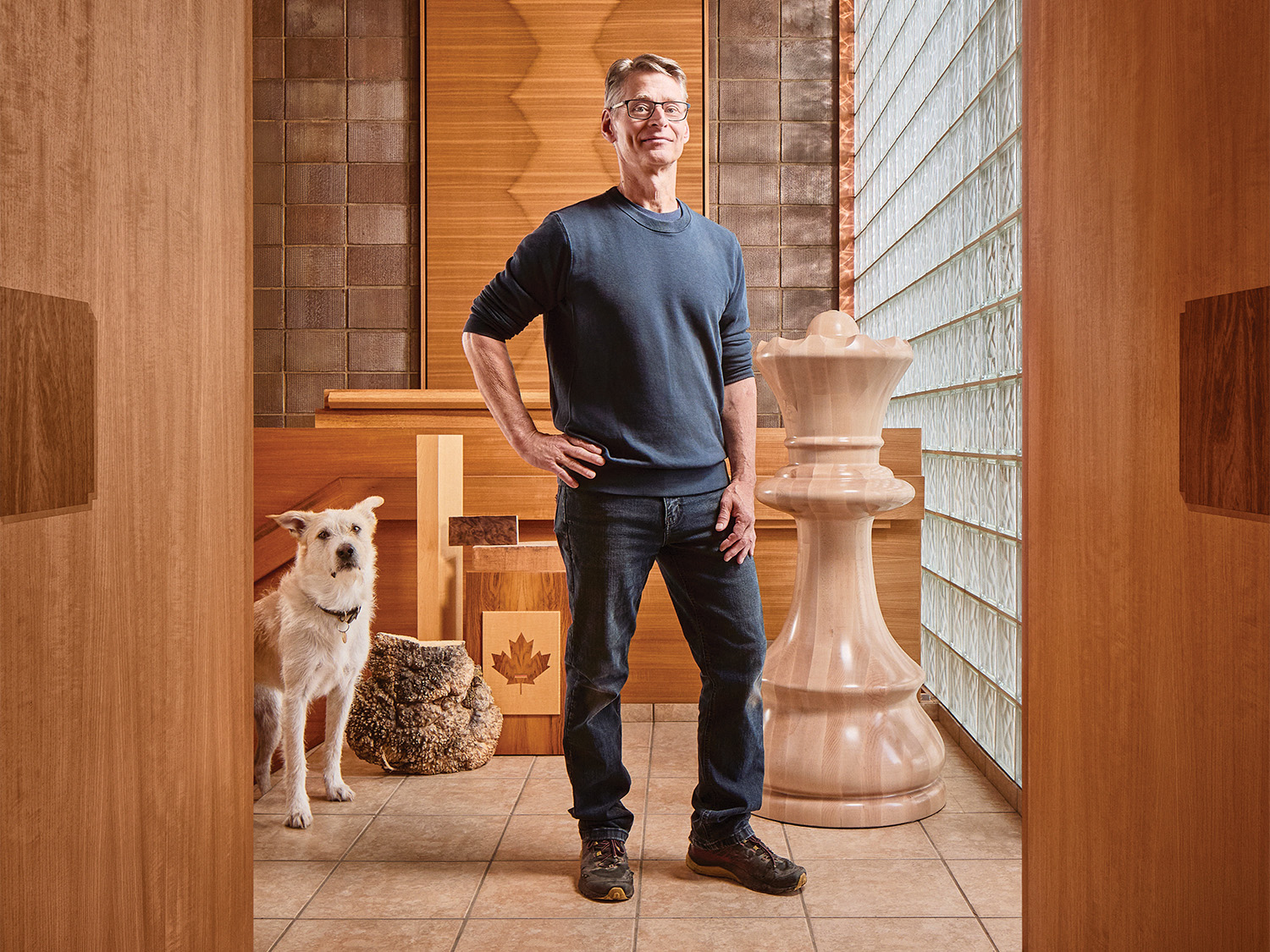
Most of the pieces in Bay 1 are made of wood, from fine cabinets and live-edge tables to a three-foot-tall chess piece and a canoe. Non-wooden items include paintings and ceramics. Reichenbach and a committee of artists choose the pieces to display.
Reichenbach’s hand is everywhere at Bay 1, from the wooden counter where he does paperwork to the thick double doors that separate the gallery space from the rest of the manufacturing facility. His craftsmanship creates the backdrop for the art pieces on display. It’s the perfect setting for Reichenbach, 61, to tell his family’s story, while Henry the shop dog sleeps at his feet.


The German capital of Berlin is surrounded by Soviet-occupied territory, the city itself split between east and west, and access is tightly controlled at checkpoint border crossings.
Alma Erdmann lives in East Berlin but studies to be a nurse in West Berlin. To pass through the border wall checkpoints relatively unaccosted, she has a permit valid for the duration of her studies — three years. During those years she sees first-hand the differences between life in the east and west. By the time she becomes a registered nurse, Erdmann has come up with a plan.
She makes up a story: she needs to get back to West Berlin for a final meeting with her professor. The window of opportunity for this story’s credibility is small, so she puts her plan in motion and says goodbye to family and friends.
Miraculously, the checkpoint guards believe the lie and allow her to pass. She does not go to meet her professor in West Berlin. Instead, she goes to the train station, and stows away on the next train leaving for the west.
Erdmann’s skills as a nurse are in demand and she works for a while in West Germany before moving to Canada, where she has a brother in Winnipeg. There she hears that the Misericordia Hospital in Edmonton is hiring nurses, and she moves.
That winter, Eberhard Reichenbach mistakes a bundled-up Alma Erdmann for an old woman waiting at a bus stop on a cold street off Jasper Avenue, and he offers her a ride home. He’s surprised when she pulls back her hood, and more surprised after she gets into the car to discover that she is East German, too. They talk long into the night. It doesn’t take long for them to marry and start a family.

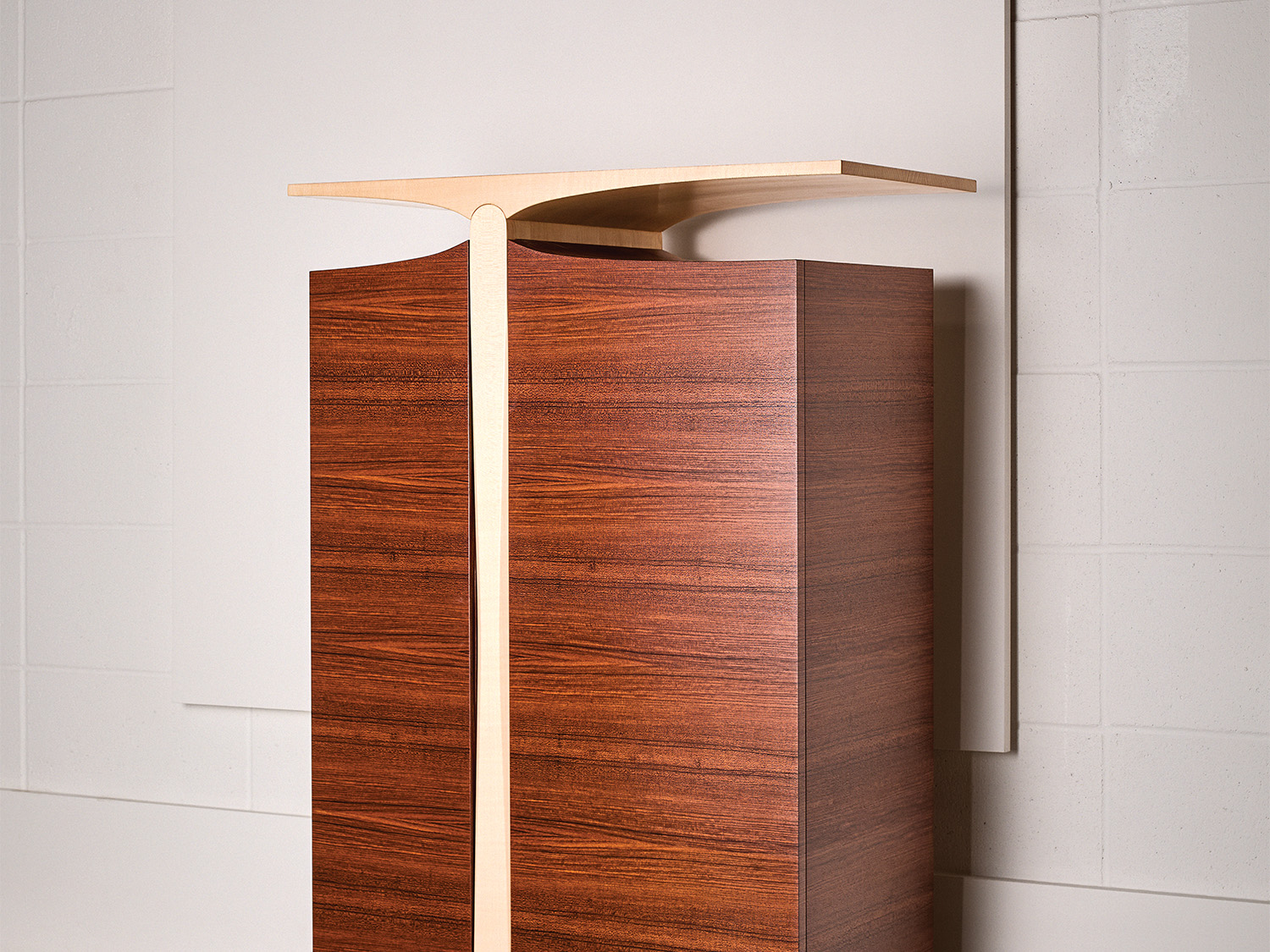
The work Ralph Reichenbach undertakes at Eberhard’s Manufacturing is split about 60-40 between residential and commercial work, but this wasn’t always the case. In the late 1960s to the 2000s, the company imported machines from West Germany for pressing veneers — a specialized method of making smooth wooden surfaces with a variety of finishes, popular in commercial interior design from the 1970s to ’90s.
During that period, Reichenbach says, the business was 75 per cent commercial. Eberhard’s Manufacturing was behind some of the wood veneers in the Winspear Theatre. Eberhard’s home in Westbrook was featured in Architectural Digest in the early 1970s. South of the border, notable projects include the walls of the dressing room for the Arizona Diamondbacks Major League Baseball team and the Nike world headquarters outside Portland, Ore.
“A lot of the higher-end houses are going for taller, thicker doors,” Reichenbach says of the company’s residential work, gesturing towards the thick, double-height doors that separate the gallery from the manufacturing floor. “They want something robust. We have one client who we’re making 31 doors for.” Three years ago, he says, they custom-made 64 doors for a single house.
It’s a hands-on process involving the project’s architect and client to get the details right: the proper colour and pattern for the veneer finish, the grain of the wood, height, weight, whether a door slides on a track or swings on a hinge. It’s the meticulous detail, and the marriage of function and beauty, that Reichenbach expects from his own work and appreciates in the work of others.
This philosophy led to Bay 1: a gallery that includes furniture and other functional pieces in a showroom that also displays fine art. The commonality is the shared language of attention to design details, artistry and craftsmanship.
“It’s unusual for a craftsman to put himself forward and develop his craft, and now he’s developed a gallery,” says John Morel, a woodworker (and former blacksmith and silversmith) from England, now living in southern Alberta. At 83, he’s the oldest artist to have work displayed in Bay 1.
He’s known Reichenbach since Eberhard introduced the two at an exhibition 50 years ago. Morel says economic considerations can win over the fine details in design. Making something innovative with intricate details or fine finishing requires more time and money, and for many manufacturers speed and volume win. Not so for Reichenbach, he says, who thinks the methods and process are equally as important. It’s a quality that Morel says unites the two as craftsmen and artists.


He recalls crossing paths with Reichenbach over the years and hearing him talk about opening a gallery. “It was six months before it was up and running,” Morel says. “Some people put forward what they think will sell. That is not the right thing to put on exhibition. The right thing is to put forward something of quality, which takes skill in the designing and making. Ralph has achieved that.”
Henry the shop dog has woken from his nap and is yawning next to one of the live-edge tables while Reichenbach talks about the relationship between craftsmanship and artistry.
“Even while I was working in the manufacturing side, I would still do some artwork and furniture on evenings and weekends,” he says. “I had a few shows, did some work for different galleries in Calgary and in Edmonton. It has always been alongside manufacturing.”
Despite the difficulty balancing his personal projects and the business of Eberhard’s Manufacturing, (remember those 31 doors that need making?) there are plenty of Reichenbach’s fine furniture and art pieces in the gallery.
Makayla Batz is a painter with work displayed in Bay 1. She’s self-taught, and first had work displayed in the gallery in 2021 when she was only 17. Like Reichenbach and Morel, she has strong feelings when it comes to the time it takes to do good work.
“Making something that’s high quality and well crafted isn’t going to turn the highest profit compared to something mass produced,” she says. “But I think there’s value in taking the time and energy to make something well.”
The manufacturing floor at Eberhard’s is busy, and Henry quietly keeps watch. The presses for making veneers are painted drab olive, and workers move pieces of wood between machines bearing German names like Wemhöner. Air ducts to manage dust are suspended from the ceiling, crossing each other like tentacles from an octopus in the rafters. A red and white sign on one cabinet reminds you to “Think SAFETY and work SAFELY!” Stacks of wood and projects in various states of completion are everywhere.



Reichenbach leads me from the manufacturing floor to a quiet office space enveloped in soft light from a wall of glass bricks. The wall displays marquetry pieces, in which cut layers of wood veneer overlay each other to create images. A short staircase leads to a boardroom, home to other artworks.
He acknowledges that creating art is a luxury. “It’s possible because of the foundation of my parents’ hard work,” he says. “Truth be told, not a lot of galleries are self-sustaining. It’s a tough business. So we’re thankful for how everything came together to let us open Bay 1.” It’s a family story, unfolding over 70 years, but the gallery is a physical manifestation of Reichenbach’s core belief in art, design and craftsmanship.
“We like design and creativity, so we’re trying to be a place where people come for that in Edmonton.”
This article appears in the October 2026 issue of Edify