

“You can either borrow the book from the library, have a friend share it with you or buy your own copy,” says Rodnyansky.
Alberta-made cookbooks you could try include Eat Alberta First by Karen Anderson, Prairie by Dan Clapson and Twyla Campbell, tawâw: Progressive Indigenous Cuisine by Shane Chartrand and Atelier Table by Lauren Kyle McDavid.
Once you’ve decided on a cookbook, start a Google spreadsheet and let it do the work for you. Rodnyansky calls it a godsend, and you won’t end up with three potato salads. No overlap, no confusion, just hop on the drive, self-assign a recipe and let everyone know what you’ve decided to make.
Sometimes, someone will claim the dish you were considering contributing to the evening. Having to choose a new dish can be a great way to get out of your comfort zone and learn something new.
You also do not have to go for the hardest recipe. This should be an adventure, not a chore. If it’s a busy week, you could just opt out of cooking altogether and sign up for cocktail duty. (This too can be tracked on the Google sheet to give everyone a heads-up.)
There is no right or wrong way to go about making the meal. But for Rodnyansky, having everyone make it in the comfort of their own home and then bring it to the host’s house is the best way to go: a potluck-type situation. Consider this factor when assigning the recipes.
For someone looking for advice or who is short on an ingredient, it doesn’t hurt to have a WhatsApp group as a lifeline.
A tip: do not leave it for the last minute, especially if you are not a pro in the kitchen yet. Take your time with the recipe, get some or all of the prep done a day early if you can and if the recipe lends itself to that.
Rodnyansky also wants to remind everyone to just follow the recipe, this is no time for spontaneity. This way “it is the cookbook’s fault,” she says with a chuckle. If it flops you know it wasn’t because of your doing — you can always blame the recipe.

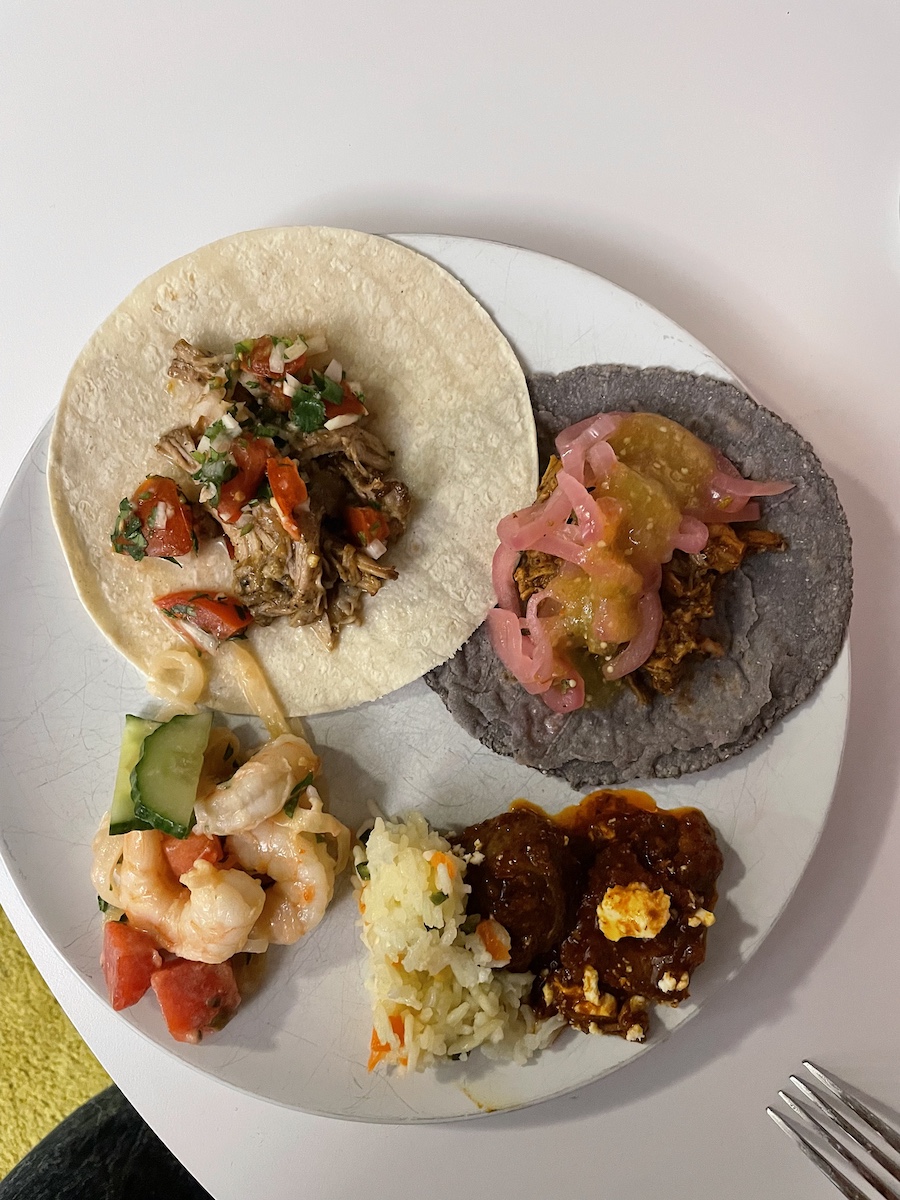
You could take turns with hosting duties — or claim the title of designated host. In her group, Rodnyansky has taken that role. This whole experience helped her get used to having people over and not always aim for perfection. Not everything will turn out as you expect it, especially when you are not in control of it all.
But that shouldn’t stop you from making each meeting a whole event: assign playlists, put together themed DIY decorations, have everyone dress to a theme. Or let the food shine on its own. This is your cookbook club, you make the rules.
As you sit around the table, and admire everyone’s creations, you can take the time to share your experiences with this specific cookbook. Exchange “battle stories” — your wins, your struggles and those satisfying moments when you salvaged a potential crisis.
And after devouring it all, reassess. Was it as delicious as you expected it to be, or below expectations? Are you blaming the book? What would you do differently next time?
And then it is time to do it all over again.
“You have to cook to survive so might as well make it fun,” says Rodnyansky.