

Be careful what you wish for.
The provincial government is promoting Alberta as a great place to build data centres, touting inexpensive natural gas to power the energy-intensive facilities, abundant and relatively cheap land, and a deregulated electricity market that makes it easier for developers to “bring their own power” to the party.
It’s true. Alberta is a great place for a company looking to build a data centre.
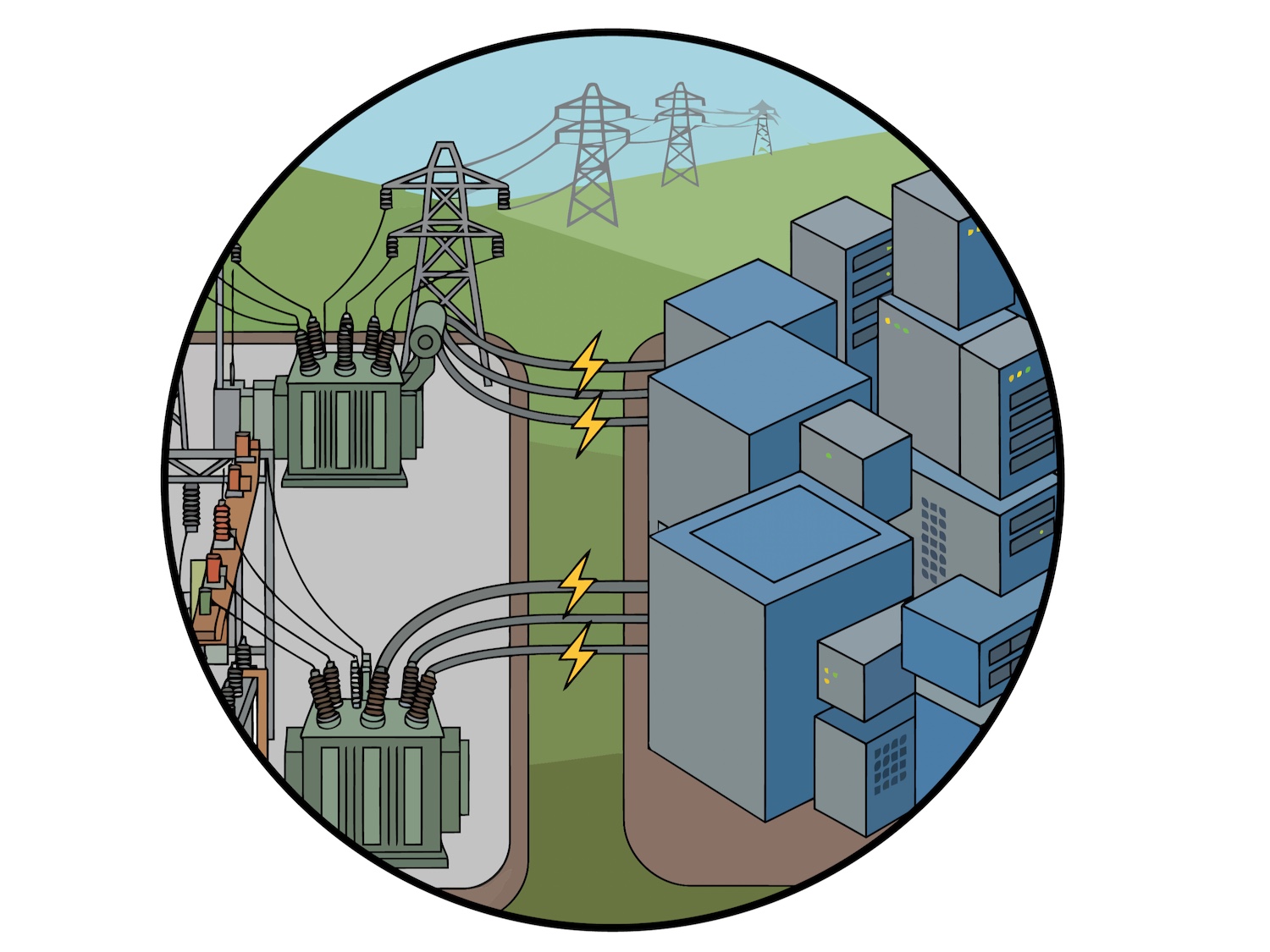
The problem is that data centres, especially the massive ones being built by “hyperscalers” (think Meta, Microsoft, Amazon and Google) to power artificial intelligence, come with a lot of baggage: noise complaints from neighbours; massive water consumption for cooling; and they draw so much electricity that, following the law of supply and demand, they can drive up electricity costs for everyone in the area. Somewhat lost in the noise and excitement of the moment is the fact that if these centres are powered by natural gas — as opposed to, say, nuclear, solar or wind — they will drive the province’s greenhouse gas emissions up astronomically.
There’s already lots of action in the sector, globally and locally. Last June, the Alberta Electric System Operator said there were 29 applications from data-centre operators to connect to the grid, representing 16,000-megawatts (MW) of electricity. To put that number in perspective: Alberta’s current peak demand is around 12,000 MW. TransAlta recently signed a memorandum of understanding with the Canada Pension Plan Investment Board and Brookfield to power a 230 MW data centre beside its Keephills generating station south of Wabamun Lake.
Some of these projects are fun to imagine but illusory as people try to cash in on a modern gold rush. I’ll put Kevin O’Leary’s “Wonder Valley,” in this bucket. His proposed world-topping project near Grande Prairie is so far a dirt road running into an empty field. But many, more viable such projects are also being proposed by the largest, most powerful corporations on the planet.

And some of these proposals are facing public opposition. Residents of Olds recently campaigned against a proposed data centre and the 1.4-gigawatt, natural-gas fired power plant that would accompany it, concerned about land use, noise, water consumption and air pollution.
The province is already attractive to data-centre operators. So, rather than trying to sell them on setting up in the province, the government should play its cards from a position of strength. There are places where a data centre makes sense; the industrial heartland around Fort Saskatchewan comes to mind.
But the provincial government’s role is to ensure that communities are protected and that the public extracts maximum benefits from these behemoths, carefully ensuring that Alberta’s land, water and air are not sacrificed for expediency’s sake.
A more visionary approach would be to ensure Albertans are in a position to take advantage of the tools these hulking boxes offer, to build value from AI and to sell it to the world. A nice story out of Calgary recently saw CoolIT Systems, a specialist in liquid cooling for data centres, bought by a U.S. company for $6.6 billion. Its 650 employees are in for big paydays. I realize that’s physical infrastructure, but more of that kind of entrepreneurial innovation, please.
There’s a cautionary lesson from the Yukon gold rush that the prospectors who went to moil for gold weren’t the ones who made money. The people who sold them shovels and tents were. It’s not always obvious where the money is to be made. Alberta needs to separate the signal from the noise if it wants to capitalize on data centres, and that won’t happen if we’re just renting cheap land and selling cheap natural gas.