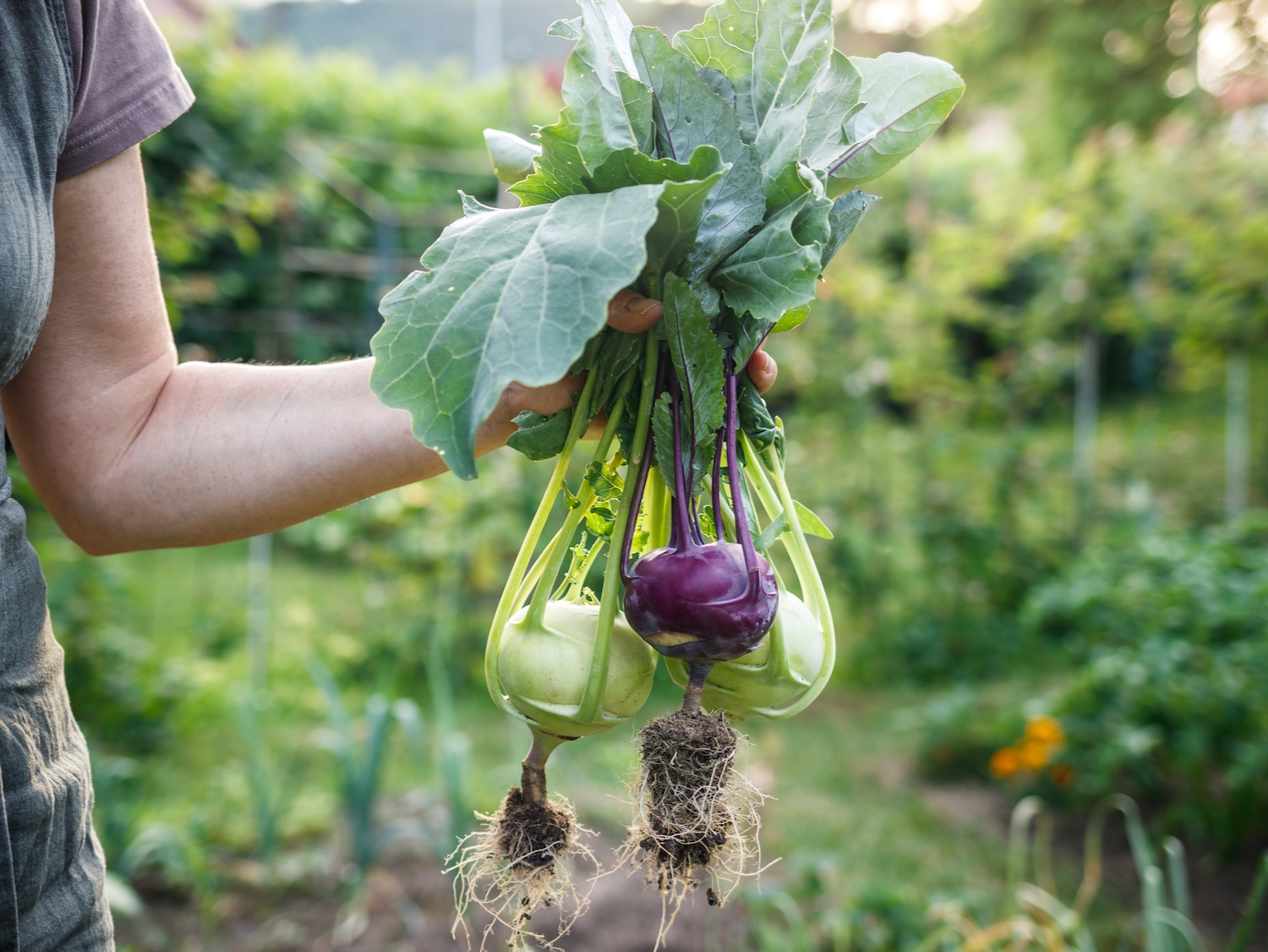
You may not have heard of kohlrabi, but you’ve definitely heard of its relatives. From the same family as cabbage, broccoli, cauliflower, kale and Brussels sprouts, it’s also called German turnip despite not being related to turnips at all.
Golby Family Farm, located in the County of Barrhead, has been growing these vegetables for a while now.
“I don’t even know how we got into it. We used to eat kohlrabi from the grocery store,” says Brandon Golby. “It was a random thing we liked and then I found out you can grow it here. So we decided to grow it.” He says the fresh, locally grown veggie is better than what you might find in a store.
Easy growing
Golby made another discovery in addition to how good home-grown kohlrabi tastes. “They’re relatively self-reliant. They don’t need piles of water. They just grow. They’re a nice plant in that respect,” he says. It made the vegetable an easy fit for the Golby Family Farm, letting them both sell the crop and keep some for their own cooking. It also means that they’re a natural fit for any home vegetable garden.
That’s not to say there aren’t challenges. Golby explains that like all the plants in the brassica family, (those cabbages, broccoli and others from above) kohlrabi can attract cabbage moths and flea beetles. These pests will eat plant leaves, causing them to die. Golby says his solution is using insect netting that keeps the majority of the bugs out.
There’s another pest that all plants have to worry about: weeds that hog all the groundwater. Golby says there’s also an easy solution to this. “We’ll start them as seedlings in little cells and then we transplant them. That way we can space them out really nicely, it makes it easy to maintain them and to weed around them.”
The trick when it comes to transplanting the kohlrabi is ensuring it gets enough water while it gets established in its new home. This can take between five and seven days, Golby says.