

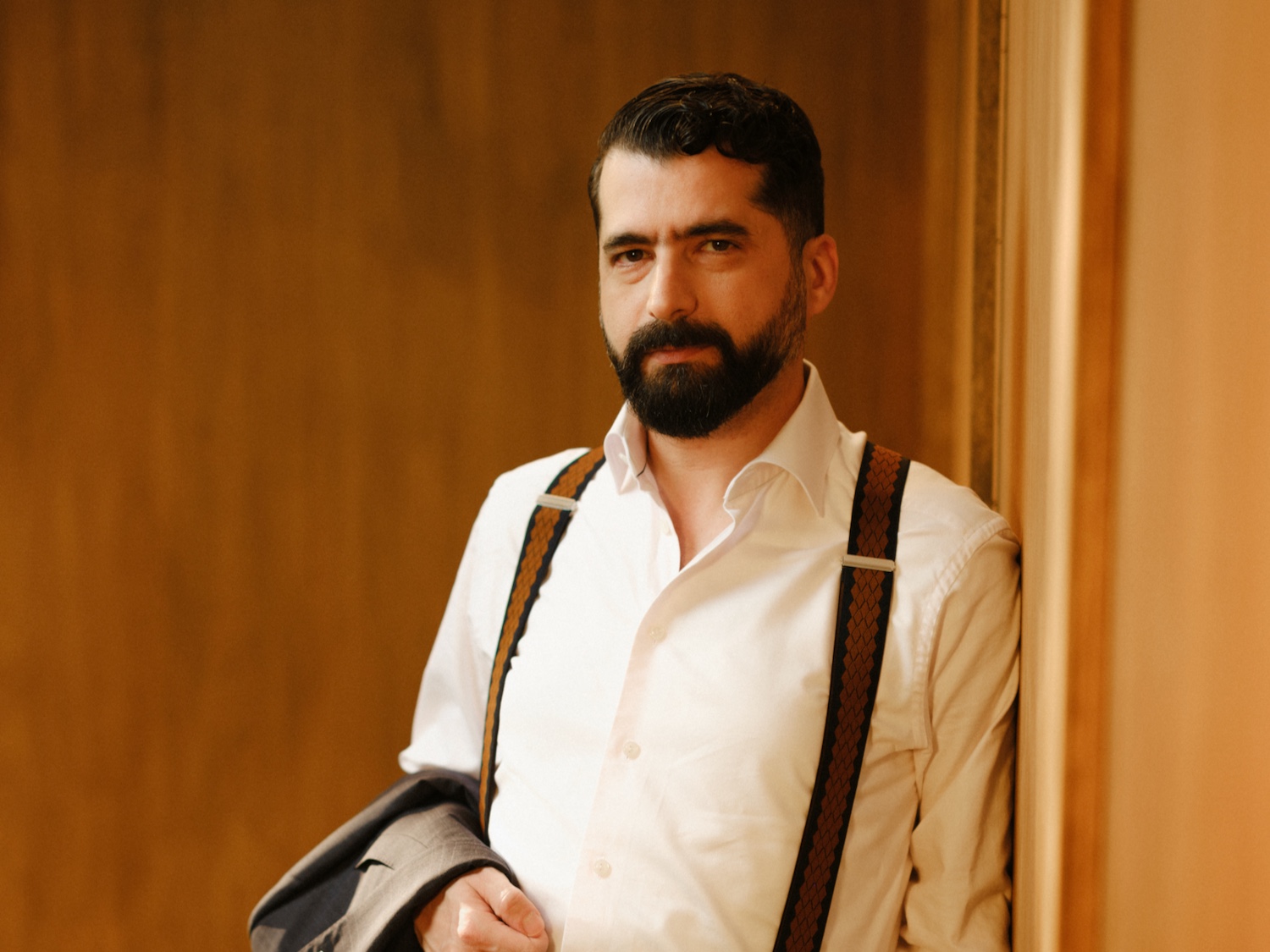
He has made substantial contributions to Alberta’s growth in economy, education and technology leadership
Age: 39
Arman Hemmati wants to bridge theory and execution to advance innovation and job creation in Alberta.
“I help companies and startups with technology development from zero to commercialization,” he says. “Someone might have an idea, and I chat with them. We ask, ‘Is the idea feasible? Does it make sense?’ And we build something viable.”
He contributes to Alberta’s economic growth and tech leadership as a U of A associate professor of mechanical engineering and an engineering researcher in emissions reduction technologies. “I’ve secured more than $22 million in research funding. I’ve trained more than 70 graduate and 1,000 undergraduate students,” he says. “They form Alberta’s future.”
One project involves co-founding a non-partisan initiative focused on Alberta’s next generation. “It involves former and current politicians, industry leaders and others,” he says. “We’re trying to improve how the government makes decisions affecting the next generation.”
The goal is better policy creation around energy, health care and education.
Hemmati’s engineering innovations focus on long-term environmental value through organizations like Infinidium Power (advanced cooling technology for data centres) and SunDraco Power (solar energy). A pragmatic environmentalist, he draws on his work reducing
the environmental footprint of the oilsands and as a UNFCCC climate observer.
His impetus is experience. He came to Canada in 2004 at 16 from Iran with little English, landing in classes at M.E. LaZerte High School. “I had this first-generation electronic dictionary that I’d turn on at the start of class,” he says. He’d spend his day looking up words. “When we were doing Shakespeare I didn’t know what was going on,” he says. But he learned steadily.
Raised by parents who encouraged him to challenge the status quo, Hemmati pushes boundaries to provoke constructive debate. Engineering is his bridge to solving complicated problems and creating a lasting legacy in the community.
This article appears in the November-December 2026 issue of Edify