
His peer-reviewed research extends the period of viability in pediatric heart transplantation, and has earned nearly$500K in grant funding, elevating Edmonton as a biomedical hub
Age: 27
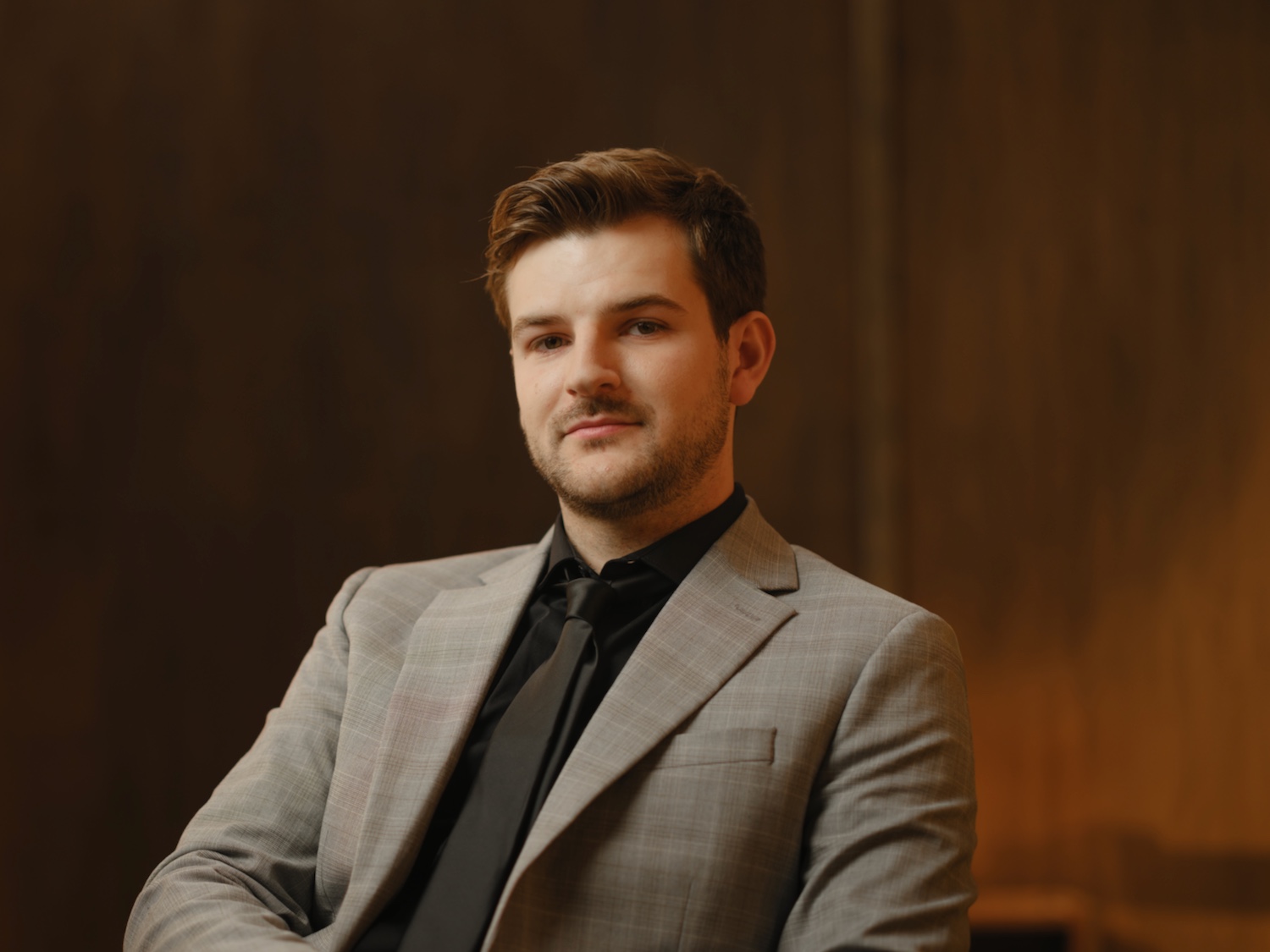
When he was about 18, Mitchell Wagner had a graduation of sorts. His cardiologist sat him down to talk to him about the fact that he was leaving the care of the Stollery Children’s Hospital. Until recently, his parents had overseen his care plans, ever since the day when he was an infant and his mom found him in his crib, blue and struggling to breathe. At two weeks old, he had cardiac surgery to correct a defect of the aorta, followed by years of appointments. “And when I was having that conversation, the first time that I interacted as an adult with a health-care professional, that triggered this feeling of gratitude for me that I hadn’t appreciated, despite all those appointments,” he says.
It changed his life. Today, he is a first-year PhD student in a combined MD/PhD program at the University of Alberta, conducting research under cardiac surgeon Darren Freed.
Wagner’s research focuses on organ preservation, specifically ex-vivo heart perfusion, to address the shortage of donor hearts. Traditional preservation methods limit viable organ transport time to four to six hours. Using continuous warm perfusion equipment, his lab circulates oxygenated fluid through the organ.Wagner describes it as “a little incubator for the heart,” which can extend its viability for up to 12 hours.
Most of Wagner’s schooling has been at the U of A apart from an internship at Boston Children’s Hospital, collaborating with biomedical engineers to design three-dimensional tissue patches. It is an example of the kind of translational research that fuels his academic training, which will span years.
“I’m enjoying the journey,” Wagner says. “Some people look at it from the outside as if you’re waiting to get to the end.” But his work is well underway. “Especially with research, it’s all focused on innovation and exploring new questions.”
This article appears in the November-December 2026 issue of Edify