
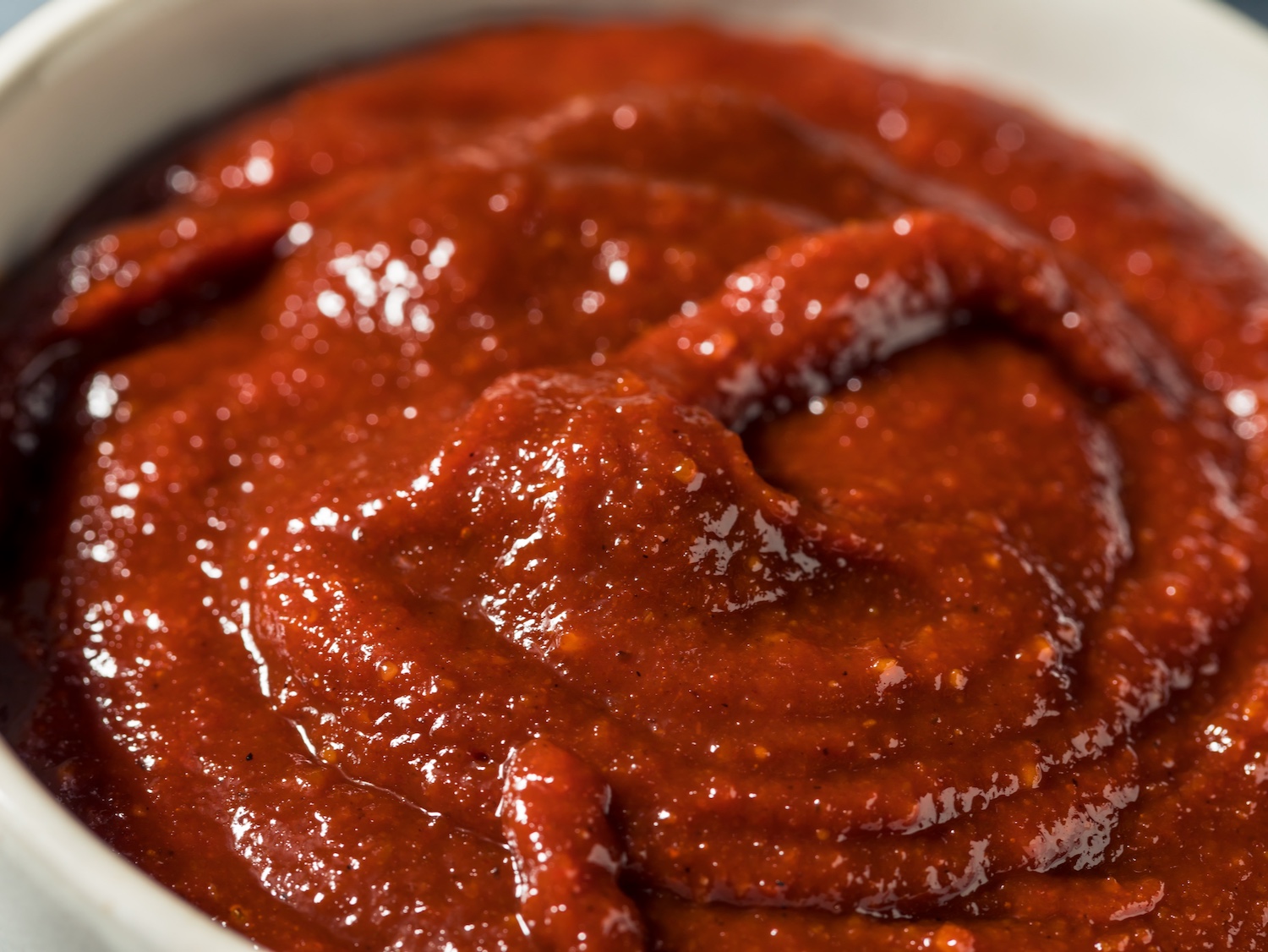
Chances are you’ve had gochujang, or at least seen it on the shelf at the store. It’s that glossy, brick-red ingredient that is more paste than sauce and most often comes in a tub. Even if you’ve cooked with it before, you may not know just how versatile an ingredient it is. To the uninitiated, it’s fermented red chili paste, and it’s one of the fundamentals of Korean cooking. While traditionally used in dishes like jjigae, bulgogi and bibimbap, it can be used to give a flavourful and spicy kick to almost any dish from mixing into soups to glazing vegetables.
“It’s more than a condiment, or more than an ingredient in Korea,” says Alex Kim. “It’s a mother sauce in Korean cooking.” Kim is a graduate of NAIT’s culinary arts program, was its 2026 Hokanson Chef in Residence and is currently the chef in charge of the restaurant Five Sails in Vancouver, As part of his residency he led students in cooking for three sittings at Ernest’s — NAIT’s fine dining restaurant, which gives culinary students hands-on experience in the industry.
“I take gochujang seriously, but I also want to be very creative with it,” Kim says, explaining that when it comes to home cooking he uses the sauce more traditionally. But when it comes to his work he wants to use it in sometimes surprising ways, either to introduce people to gochujang for the first time or to provide people who know it well with a new experience.

“The chili or the hot pepper is the number one key ingredient,” he says. There aren’t many farmers growing Korean-style hot peppers in Canada, however, so he typically imports them or uses a different type of hot pepper that is locally grown. Then he dries the peppers (for his next batch he’s going to try sun drying) before mixing them with a fermented starch. Kim has used soybean, malt and wheat in the past, but finds that for his purposes the best starch is rice. “I struggled with it in the beginning,” he says, “but then I got better and could start experimenting.”
Kim makes his own gochujang, but says it’s a labour intensive process that he doesn’t recommend for home cooks, especially when it’s now so widely available in grocery stores.
Kim uses gochujang in a variety of ways, and the diversity of the dishes highlights just how versatile an ingredient it is. He uses gochujang instead of cayenne pepper when making shellfish bisque so that in addition to the spice the dish picks up sweet and umami flavours. That complex flavour is what Kim seeks to bring out in all of his gochujang-infused dishes. One such dish is gochujang and tuna ice cream served with caviar and tuna tartare. He also incorporates gochujang into sauces when he prepares duck dishes.
Kim says he doesn’t need to add a lot in these applications. “To me it’s just a little, but it’s really a personal reference point.” There’s actually a measure of that spiciness for different types of gochujang called the gochujang hot-taste unit, which goes from mild to extreme heat. That number is based on the concentration of capsaicin, which gives peppers their spicy taste.
When he measures ingredients, Kim says it’s more important to know your own tolerances and read the package to make sure you know the concentration of pepper in the gochujang you have on hand. “Use it little by little, and then always taste it when you’re seasoning,” he says. “There are different recipes. Some involve cooking the gochujang, or some involve putting fresh gochujang into your finished product.”
His recommendation, however, is to cook the gochujang, especially when using it with meat or poultry. Cooking it will cause the sugars in the gochujang to caramelize, intensifying the flavour as the moisture is reduced. Cooking it along with onions or garlic in oil or butter will ensure that the gochujang doesn’t end up burnt.
Courtesy of Alex Kim



Yield: about 2½ cups